E-Mail:kb@czgraphite.com
Tel:+86 15533739372


Graphite news is mainly for industry users to share graphite materials and products and other related technical information, so that customers can keep abreast of industry trends and developments.
Time: 2026-06-29 02:36:17 Source: Cangzhou Carbon Technology Co., Ltd.
Industrial crucibles are subjected to extreme thermal and chemical stress. Oxidation at high temperatures gradually degrades the crucible material, leading to cracks, reduced strength, and early failure. Anti-oxidation coatings offer a proven solution to shield the crucible surface, significantly extending service life and lowering operational costs. This article explains how these coatings work, their key benefits, and practical considerations for selection.
When graphite or silicon carbide crucibles are exposed to air at temperatures above 800°C, oxygen reacts with the carbon content, forming CO or CO₂. This continuous material loss weakens the crucible wall, reduces thermal conductivity, and eventually causes structural failure. In foundries, crucible replacement downtime can cost thousands per hour, making oxidation protection a high-ROI investment.
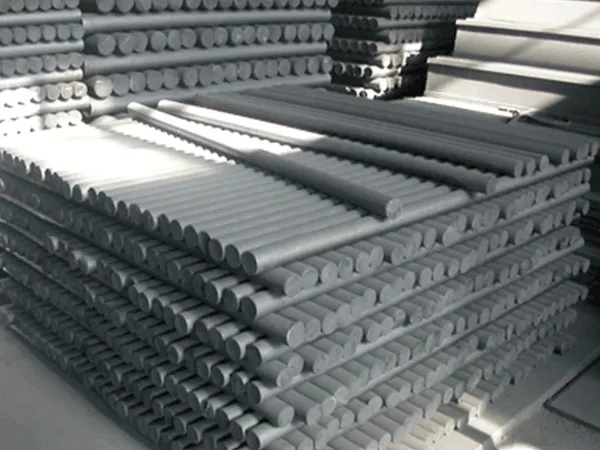
Advanced anti-oxidation coatings create a dense, impermeable barrier on the crucible surface. These coatings typically contain ceramic or refractory particles (e.g., alumina, zirconia, or mullite) suspended in a binder system. When applied and cured, they form a physical shield that blocks oxygen diffusion while maintaining thermal shock resistance.
Surface preparation is critical. The crucible must be clean, dry, and slightly roughened for mechanical adhesion. Cangzhou Carbon recommends a two-layer spray or brush application, followed by controlled curing to avoid delamination. Proper coating thickness (typically 0.3–0.8 mm) balances protection with heat transfer efficiency.
Not all coatings suit every melt. For aluminum alloys, the coating must resist reduction by molten metal. For steel or copper, higher temperature stability is required. Cangzhou Carbon engineers custom formulations to match your specific operating conditions.
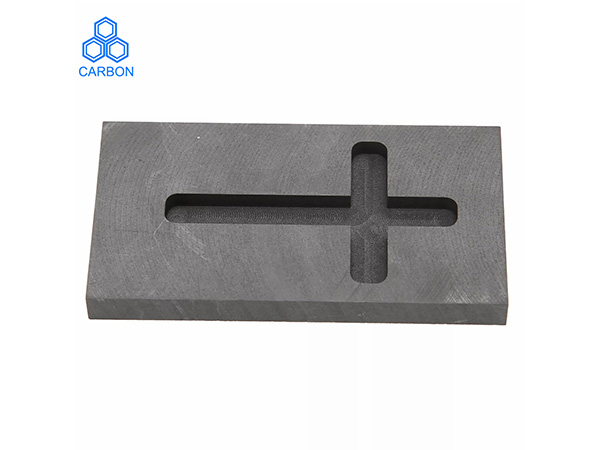
Choosing an off-the-shelf coating can lead to suboptimal results. Consider these factors:
Cangzhou Carbon offers free coating compatibility evaluation – send us your crucible specifications and melting details for a tailored recommendation.
High-quality coatings are engineered to have thermal conductivity close to bare crucible material. The thin layer (0.3–0.8 mm) adds negligible resistance. In fact, by preventing oxidation damage, it maintains original heat transfer over time.
Depending on usage severity, reapplication is typically needed every 30–60 cycles. Visual inspection – cracks or flaking – indicates recoating is due. Cangzhou Carbon can provide a customized maintenance schedule.
Yes, provided the crucible is structurally sound and properly cleaned. Surface oxidation must be removed mechanically. Coating a used crucible can still extend life by 30–50%.
Extending crucible life with anti-oxidation coating is a straightforward, cost-effective strategy for any foundry or melting operation. Cangzhou Carbon specializes in high-performance coatings that deliver measurable results. Contact our team for a consultation or sample test.
