E-Mail:kb@czgraphite.com
Tel:+86 15533739372


Graphite news is mainly for industry users to share graphite materials and products and other related technical information, so that customers can keep abreast of industry trends and developments.
Time: 2026-06-15 02:36:45 Source: Cangzhou Carbon Technology Co., Ltd.
Choosing the right crucible for melting gold and silver is a critical decision that directly affects melt quality, operational efficiency, and equipment lifespan. Whether you run a jewelry workshop, a precious metals refinery, or a small-scale casting operation, the crucible material, size, and design must match your specific melting conditions. In this guide, we examine the most common crucible types, compare their performance characteristics, and explain how to make an informed choice. As a trusted manufacturer with years of industry experience, Cangzhou Carbon provides high-quality crucibles engineered to meet the demands of professional gold and silver melting.
The base material of a crucible determines its temperature tolerance, resistance to thermal shock, and chemical reactivity with molten metals. For gold and silver melting, three main materials dominate the market.
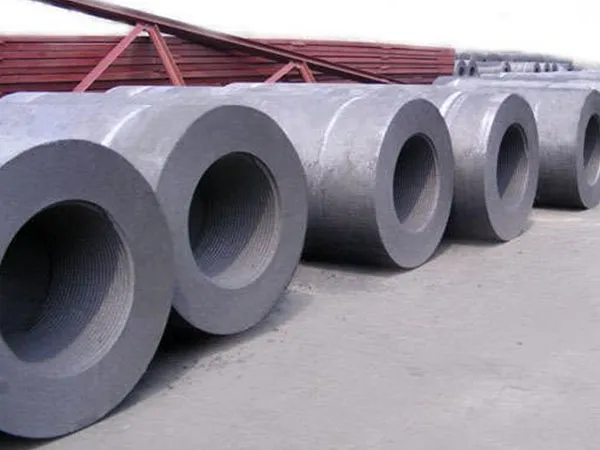
Graphite crucibles are widely used for precious metals due to their excellent thermal conductivity and uniform heat distribution. They handle temperatures up to 2500°C (4532°F) and resist chemical attack from molten gold and silver. However, pure graphite is porous and can oxidize quickly in air, so a protective coating or glaze is often applied. Cangzhou Carbon graphite crucibles feature a dense, fine-grained structure that minimizes oxidation and extends service life.
Silicon carbide (SiC) crucibles offer superior thermal shock resistance and mechanical strength compared to graphite. They withstand rapid heating and cooling cycles without cracking, making them ideal for high-frequency induction furnaces. SiC crucibles also resist erosion from fluxes used in refining processes. Their higher cost is justified by longer lifespan in demanding applications.
Clay-graphite crucibles blend natural graphite with refractory clays, balancing thermal performance and affordability. They are suitable for medium-temperature melting (up to 1600°C) and are commonly used for silver and lower-temperature gold alloys. While not as durable as SiC, clay-graphite crucibles provide a cost-effective solution for small-scale or intermittent use.
Beyond material, several technical parameters influence crucible selection. Evaluate each factor against your specific melting setup.
Gold melts at 1064°C and silver at 961°C, but fluxes and superheating often require crucibles rated above 1200°C. For induction furnaces or torch melting, choose a crucible with a minimum working temperature of 1400°C to ensure a safety margin. Cangzhou Carbon crucibles are tested to maintain structural integrity even at extreme temperatures.
Rapid heating or cooling can cause crucibles to crack. If your process involves frequent temperature changes, prioritize materials like silicon carbide or high-density graphite that exhibit low thermal expansion. Always preheat crucibles gradually to extend their life.
Crucible capacity is measured by the weight of metal it can hold, typically from 1 kg to over 100 kg. Match the crucible volume to your typical melt size – oversized crucibles waste energy, while undersized ones require multiple pours. Cangzhou Carbon offers customizable sizes to fit standard and specialty furnaces.
Common shapes include A-shape (tapered), B-shape (straight), and bowl-type. Tapered crucibles facilitate easy pouring and slag separation, while straight-wall crucibles maximize usable volume. For induction furnaces, choose a shape that aligns with the coil geometry for efficient coupling.
To help you decide, the table below summarizes key performance differences among the three main crucible materials.
For most professional gold and silver melting operations, a premium graphite or silicon carbide crucible from Cangzhou Carbon provides the best balance of performance and longevity. Always consider the specific flux and alloy composition you use – some fluxes contain chlorides or borates that can attack certain crucible binders.
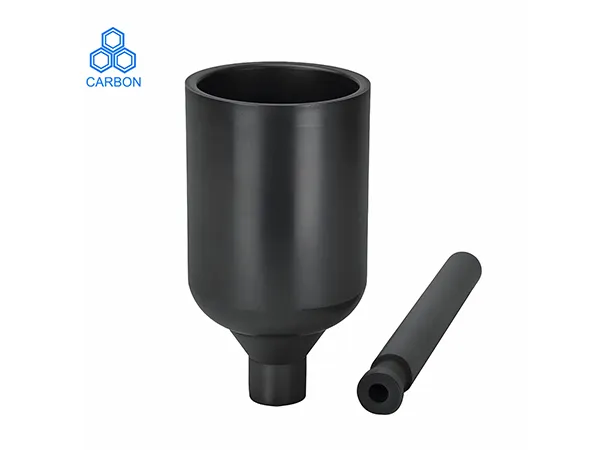
With a decade of specialized experience, Cangzhou Carbon manufactures crucibles that meet rigorous quality standards. Each crucible undergoes density testing, thermal shock evaluation, and dimensional inspection before shipping. Our graphite crucibles are isostatically pressed for uniform density and minimal porosity, reducing oxidation and metal contamination. Silicon carbide crucibles are formulated with high-purity SiC grains and advanced binders for superior erosion resistance. Customers across jewelry, refining, and casting industries rely on Cangzhou Carbon for consistent performance and responsive support.
Yes, provided you clean the crucible thoroughly between uses to avoid alloy contamination. Dedicate separate crucibles for each metal if purity is critical.
Lifespan depends on material, operating temperature, and handling. A high-quality graphite crucible can last 50–100 melts, while silicon carbide crucibles may exceed 200 melts under proper conditions.
Most crucibles come pre-glazed. If you notice oxidation or pitting, a boron nitride coating can extend life. Cangzhou Carbon offers optional protective coatings for demanding environments.
Selecting the right crucible is an investment in melt quality and process efficiency. By understanding material properties, matching crucible specifications to your furnace and metal type, and buying from a reputable manufacturer like Cangzhou Carbon, you ensure consistent results and lower operating costs.

 Russian