E-Mail:kb@czgraphite.com
Tel:+86 15533739372


Graphite news is mainly for industry users to share graphite materials and products and other related technical information, so that customers can keep abreast of industry trends and developments.
Time: 2026-11-02 02:36:44 Source: Cangzhou Carbon Technology Co., Ltd.
Selecting a graphite crucible supplier is a decision that directly impacts melt quality, refractory life, and overall operational costs. Yet many buyers focus solely on price or delivery time, overlooking the rigorous quality checks that separate reliable manufacturers from subpar ones. Understanding what to verify—from raw material purity to final dimensional tolerance—empowers you to choose a partner who delivers consistent, high-performance crucibles. This article outlines the critical quality inspections every informed buyer must demand.
The starting point of any crucible’s performance is the carbon source. Reputable suppliers, such as Cangzhou Carbon, source ultra-high-purity graphite with ash content below 0.1%. Ask for a certificate of analysis (COA) showing carbon percentage, ash content, and particle size distribution. Low-purity graphite introduces contaminants that can ruin sensitive alloys or cause premature cracking. Insist on spectrometric analysis for trace elements like iron, sulfur, and vanadium.
Binders (pitch, resin) and additives (antioxidants, wetting agents) affect the crucible’s density and thermal shock resistance. Verify that the binder system is compatible with your operating temperature range. A reputable supplier will disclose the type of binder and the ratio of additives. Conduct a thermogravimetric analysis (TGA) if possible to confirm the binder burnout profile matches the supplier’s claims.
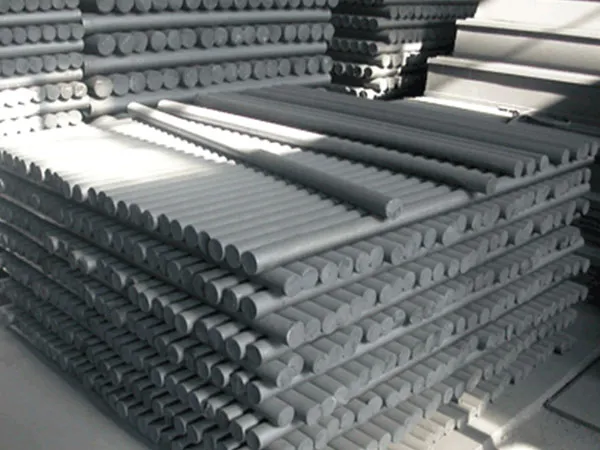
The forming method determines crucible homogeneity. Isostatic pressing produces uniform density and eliminates weak seams, while conventional molding may introduce anisotropic properties. Ask whether the supplier uses cold isostatic pressing (CIP) and what pressure is applied. Cangzhou Carbon employs CIP at 200 MPa to ensure consistent density across all wall sections. For critical applications, request microstructural imaging (SEM) to confirm particle alignment.
Thermal processing must be precisely controlled to achieve the desired crystalline structure. Verify the supplier’s firing temperature profile (typically 2200–2600°C) and soak time. Incomplete graphitization reduces thermal conductivity and increases oxidation rate. A reliable supplier will provide records of temperature uniformity across the furnace. Resistivity testing is a quick way to validate graphitization level—lower resistivity indicates better graphitic ordering.
Even minor deviations in diameter, wall thickness, or bottom radius can cause crucible rocking, uneven heating, or premature failure. The following checks are non-negotiable:
Demand a dimensional inspection report with each shipment. Suppliers like Cangzhou Carbon provide automated laser measurement to guarantee zero-defect delivery.
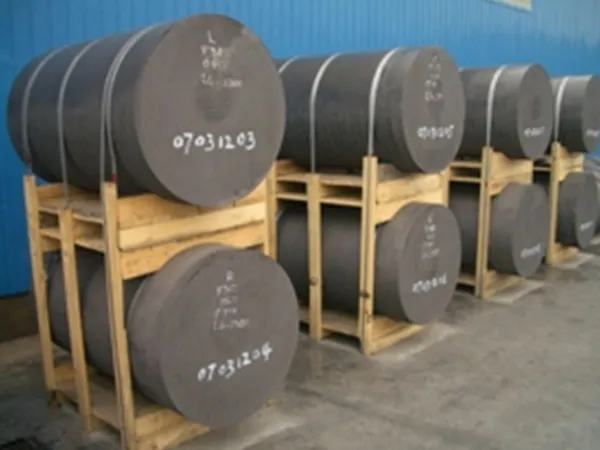
Graphite crucibles are repeatedly heated and cooled. A quality supplier conducts thermal shock cycling tests—for example, rapidly transferring a crucible from 1200°C to room temperature water. Examine the supplier’s data on number of cycles before crack initiation. Crucibles that survive >15 cycles without visible damage indicate robust material and design.
Oxidation at high temperature shortens crucible life. Request bulk density (minimum 1.8 g/cm³ for standard crucibles) and porosity (≤15%). Lower porosity reduces oxygen ingress. Some suppliers apply a protective coating; verify its composition and temperature rating. Cangzhou Carbon tests oxidation weight loss at 1000°C for 4 hours; a loss of <5% is acceptable for most non-ferrous applications.
Beyond product-level checks, evaluate the supplier’s overall quality infrastructure. Look for:
A supplier that openly shares these credentials demonstrates confidence in their quality. Cangzhou Carbon maintains an audited quality system and provides full documentation on request.
In conclusion, rigorous quality checks are not an optional extra—they are the only way to ensure your graphite crucibles deliver consistent performance, longer life, and fewer interruptions. By systematically verifying raw materials, manufacturing processes, dimensional tolerances, performance test results, and certifications, you eliminate guesswork and build a partnership with a supplier you can trust. Whether you choose an established name like Cangzhou Carbon or another manufacturer, apply these checks to protect your investment and your production line.
