E-Mail:kb@czgraphite.com
Tel:+86 15533739372


Graphite news is mainly for industry users to share graphite materials and products and other related technical information, so that customers can keep abreast of industry trends and developments.
Time: 2026-11-09 02:36:00 Source: Cangzhou Carbon Technology Co., Ltd.
When melting aluminum, the choice of crucible material directly impacts efficiency, safety, and product quality. Graphite crucibles have long been favored for their exceptional thermal conductivity and resistance to thermal shock, but understanding their temperature limits is critical to avoid premature failure or contamination of the melt. This article examines the maximum operating temperatures for graphite crucibles used in aluminum melting, the factors that influence these limits, and how to select the right crucible for your process. Drawing on industry expertise from Cangzhou Carbon, we provide a professional, data-driven guide for engineers and purchasing managers.
Graphite crucibles are capable of withstanding temperatures far above the melting point of aluminum (660°C). Standard high-density graphite crucibles typically have a maximum service temperature between 1600°C and 1800°C under inert or reducing atmospheres. However, in air or oxidizing conditions, the practical limit drops to around 800–900°C due to oxidation. For aluminum melting, the crucible rarely needs to exceed 750–800°C, making graphite a safe and reliable choice—provided the crucible is properly rated and maintained.
Although aluminum melts at a relatively low temperature, overheating the crucible can accelerate oxidation, reduce crucible life, and introduce impurities. Crucibles from Cangzhou Carbon are manufactured with a controlled porosity and ceramic coating that enhances oxidation resistance, allowing sustained use at temperatures up to 850°C without significant degradation. Exceeding the recommended limit can cause cracking, spalling, or catastrophic failure.
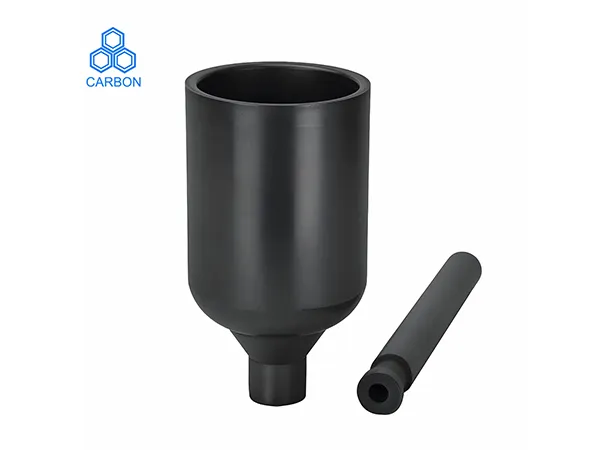
Not all graphite crucibles are equal. The effective temperature limit depends on several material and design parameters:
Therefore, for aluminum melting in ambient air, the practical temperature limit of a standard uncoated graphite crucible is approximately 800°C. Upgrading to a Cangzhou Carbon coated crucible raises that limit to 900°C, providing a safety margin for superheat or alloying operations.
To help users select the appropriate crucible, we compare three common grades used for aluminum melting:
| Grade | Max Continuous Temp (Air) | Thermal Shock Resistance | Typical Application |
|---|---|---|---|
| Standard Graphite | 750–800°C | Good | Low-pressure die casting, manual pouring |
| High-Density Graphite (Coated) | 850–900°C | Excellent | Automated melting, high-volume production |
| Carbon-Bonded SiC Graphite | 900–950°C | Superior | Aluminum alloys with high superheat (e.g., 7000 series) |
For most aluminum melting operations, a standard graphite crucible from Cangzhou Carbon provides sufficient temperature headroom. However, if your process requires prolonged holds above 800°C or uses aggressive fluxes, a coated or SiC upgrade is recommended.
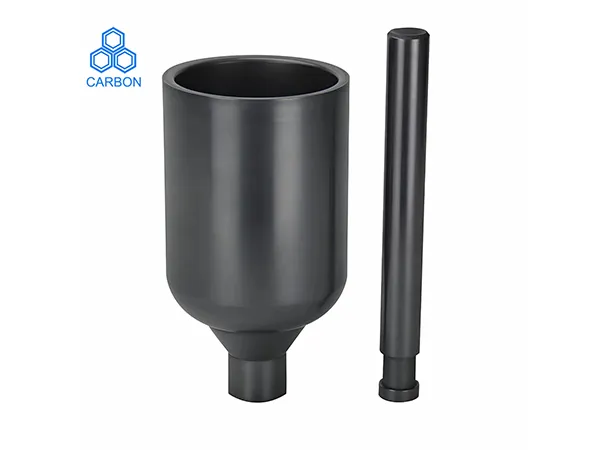
Selecting a crucible involves matching the temperature limit to your actual process conditions. Follow these steps:
Remember, operating a crucible at or near its limit reduces service life. Always allow a 50–100°C safety margin below the manufacturer’s maximum.
No. A standard graphite crucible in air will oxidize rapidly above 800°C. Specialized crucibles with SiC coatings may reach 950°C, but 1000°C is only possible in inert atmospheres. For aluminum melting, 1000°C is unnecessary and dangerous.
Every crucible undergoes thermal shock testing and porosity measurement. We use isostatic pressing to achieve uniform density, and our coating thickness is controlled within ±0.1 mm. This guarantees repeatable performance across batches.
Exceeding the limit accelerates oxidation, leading to surface pitting, reduced wall thickness, and eventual cracking. The crucible may also release carbon particles into the melt, causing inclusions. Always follow the recommended maximum temperature.
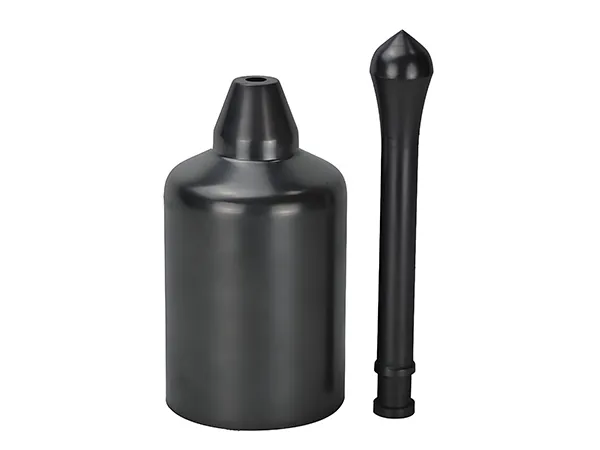
Graphite crucibles are an excellent choice for aluminum melting, with temperature limits that comfortably cover the typical 660–800°C range. By selecting the appropriate grade and coating, and by understanding the factors that affect thermal performance, you can achieve long crucible life and high-quality melts. For applications requiring enhanced oxidation resistance and higher temperature safety margins, Cangzhou Carbon offers a range of engineered crucibles backed by rigorous testing. Evaluate your process conditions carefully, and always consult the manufacturer’s technical data before operation.

 Russian