E-Mail:kb@czgraphite.com
Tel:+86 15533739372

Graphite news is mainly for industry users to share graphite materials and products and other related technical information, so that customers can keep abreast of industry trends and developments.
Time: 2026-10-19 02:36:11 Source: Cangzhou Carbon Technology Co., Ltd.
In the industrial recycling of precious metals from scrap—whether it be electronic waste, jewelry remnants, or catalytic converters—the choice of melting vessel directly impacts yield, purity, and operational cost. Graphite crucibles have emerged as the preferred tool for this demanding process, offering exceptional thermal conductivity, chemical inertness, and resistance to thermal shock. Understanding how to select and use the right graphite crucible can mean the difference between a profitable recovery operation and costly contamination losses. Cangzhou Carbon has been supplying high-performance graphite crucibles to precious metal refiners worldwide, combining material science expertise with decades of manufacturing experience.
Graphite crucibles serve as containment vessels during the melting and refining of scrap metals at temperatures often exceeding 1200°C. Their unique properties make them indispensable for processing gold, silver, platinum, palladium, and rhodium. Unlike ceramic or clay-graphite crucibles, high-purity graphite crucibles do not react with molten precious metals, preventing contamination and ensuring maximum recovery rates. Additionally, graphite’s excellent thermal conductivity allows for rapid heating and uniform temperature distribution, reducing energy consumption and cycle times.
Scrap materials often contain fluxes, binders, and other impurities that create corrosive slag. Graphite’s resistance to chemical attack from fluxes (such as borax and soda ash) and its non-wetting characteristic minimize metal loss through slag entrapment. Furthermore, graphite crucibles can withstand repeated heating and cooling cycles without cracking—a critical factor in high-throughput recovery operations.
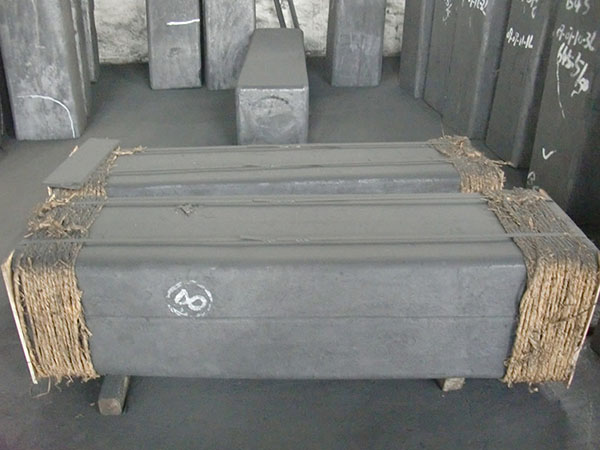
When comparing graphite crucibles to traditional clay-graphite or silicon carbide options, several performance differentiators emerge, especially for precious metal recovery where purity is paramount.
Cangzhou Carbon specializes in manufacturing graphite crucibles tailored specifically for the precious metal recovery industry. Our crucibles are produced using isostatic pressing technology, which ensures uniform density and eliminates internal voids that could cause failure under thermal stress. Each crucible undergoes rigorous quality inspection to verify dimensional accuracy and purity.
Different scrap streams—such as gold-plated pins, silver solder, or platinum gauze—require different crucible geometries. Cangzhou Carbon offers a range of shapes and sizes, from small finger crucibles for laboratory-scale refining to large pot crucibles for industrial smelting operations. We also provide graphite covers and stopper rods to minimize oxidation during melting.
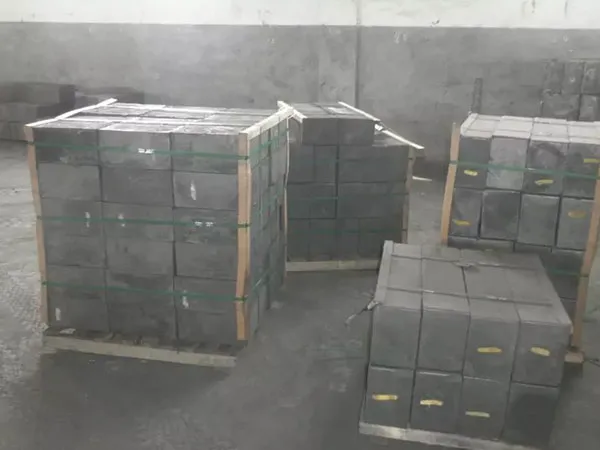
Choosing an appropriate crucible involves matching material properties to your specific melting parameters. Consider the following factors:
Yes, graphite is chemically inert to gold, silver, platinum group metals, and their alloys. However, for very reactive metals like aluminum in mixed scrap, a different lining might be recommended.
After use, allow the crucible to cool slowly to prevent thermal shock. Remove solidified slag mechanically or with a mild acid wash (e.g., dilute hydrochloric acid). Avoid over-cleaning that could erode the graphite surface.
With proper handling, an isostatically pressed graphite crucible can last 200–500 melting cycles, depending on temperature extremes and slag aggressiveness.
Graphite crucibles remain the industry standard for precious metal recovery from scrap due to their unmatched combination of thermal performance, chemical stability, and longevity. Cangzhou Carbon provides high-quality crucibles backed by technical support to help refiners optimize their processes and achieve higher recovery yields. Contact our team to discuss the ideal crucible specifications for your scrap recycling operation.
