E-Mail:kb@czgraphite.com
Tel:+86 15533739372

Graphite news is mainly for industry users to share graphite materials and products and other related technical information, so that customers can keep abreast of industry trends and developments.
Time: 2026-05-12 02:54:04 Source: Cangzhou Carbon Technology Co., Ltd.
Heat treatment environments demand materials that can survive extreme temperatures, resist chemical attack, and maintain dimensional stability over long production cycles. Engineers and procurement teams often face a key decision: should they choose high-purity graphite or carbon-carbon (C/C) composites for fixtures, insulation components, and structural parts inside furnaces?
This article provides a clear, experience-driven comparison of these two materials. It explains how each performs in real industrial conditions and helps you select the right option based on temperature range, atmosphere, mechanical load, and lifecycle cost.
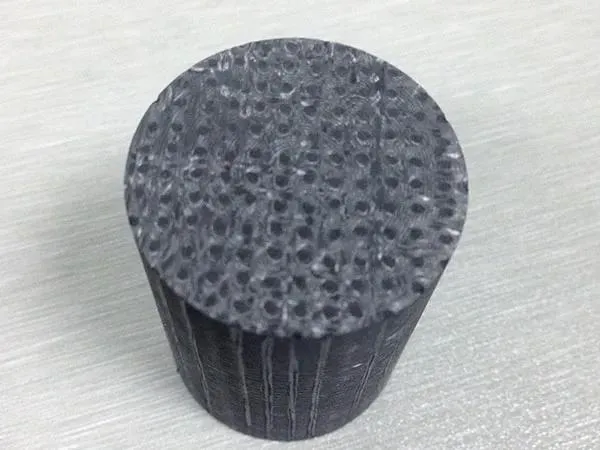
High-purity graphite is a refined form of carbon with a purity level typically above 99.9%. Manufacturers produce it through high-temperature graphitization processes, which remove impurities and enhance thermal stability. Its structure consists of layered carbon planes, which provide excellent thermal conductivity and machinability.
This material is widely used in vacuum furnaces, sintering systems, and crystal growth applications because it combines thermal resistance with relatively low cost and easy processing.
Carbon-carbon composites are engineered materials made by reinforcing carbon fibers within a carbon matrix. This structure gives them exceptional strength, especially at high temperatures. Unlike traditional graphite, C/C composites maintain mechanical integrity even under thermal shock and heavy loads.
Industries such as aerospace and advanced metallurgy rely on these materials for extreme applications where failure is not an option.
1. Temperature Resistance
Both materials perform well at high temperatures, but their limits differ in practical use.
High-purity graphite performs reliably in temperatures up to 3000°C in inert or vacuum environments. However, it becomes more fragile as temperature rises, especially under mechanical stress.
Carbon-carbon composites can also withstand temperatures above 3000°C, but they maintain structural strength far better at elevated temperatures. This advantage becomes critical in applications involving repeated thermal cycling or mechanical loading.
Key takeaway: If your process involves static components, graphite is sufficient. If your components experience stress or movement at high temperature, C/C composites offer better reliability.
2. Mechanical Strength and Durability
Graphite is inherently brittle. While it is easy to machine into complex shapes, it can crack or chip under impact or load.
Carbon-carbon composites, on the other hand, provide superior tensile strength, flexural strength, and fracture resistance. Their fiber-reinforced structure prevents sudden failure and extends service life.
Practical implication: Fixtures, trays, and load-bearing structures benefit significantly from C/C composites, especially in automated or high-throughput furnaces.
3. Thermal Shock Resistance
Thermal shock occurs when materials experience rapid temperature changes. This is common in heat treatment processes such as quenching or fast heating cycles.
Graphite has decent thermal shock resistance due to its low thermal expansion. However, it can still develop microcracks over time.
Carbon-carbon composites excel in this area. Their fiber structure absorbs thermal stress and prevents crack propagation.
Conclusion: For processes involving frequent heating and cooling cycles, C/C composites reduce failure rates and maintenance downtime.
4. Purity and Contamination Control
High-purity graphite is specifically designed for environments where contamination must be minimized. It is widely used in semiconductor and precision metallurgy applications.
Carbon-carbon composites may contain residual binders or impurities depending on the manufacturing process. While high-grade C/C materials can achieve excellent purity, they often require additional treatment.
Recommendation: If your process demands ultra-clean conditions (e.g., semiconductor heat treatment), high-purity graphite is usually the safer choice.
5. Oxidation Resistance
Neither material performs well in oxidizing environments without protection.
Graphite begins to oxidize at around 400–500°C in the presence of oxygen. Carbon-carbon composites behave similarly but may degrade faster due to their larger surface area.
Both materials typically require coatings such as silicon carbide (SiC) to improve oxidation resistance.
Important note: Always evaluate furnace atmosphere. In vacuum or inert gas conditions, both materials perform excellently. In air, protective coatings are essential.
6. Machinability and Design Flexibility
Graphite is easy to machine into complex geometries with tight tolerances. This makes it ideal for custom fixtures and prototypes.
Carbon-carbon composites are more difficult and costly to machine due to their fiber structure. Manufacturing often involves molding and densification processes rather than subtractive machining.
Impact on operations: If your application requires frequent design changes or custom parts, graphite offers faster turnaround and lower cost.
7. Cost vs. Lifecycle Value
Initial cost often drives decision-making, but lifecycle cost tells the real story.
High-purity graphite: lower upfront cost, shorter lifespan in demanding conditions
Carbon-carbon composites: higher initial investment, longer service life, fewer replacements
In high-volume production environments, the reduced downtime and longer lifespan of C/C composites often justify the higher initial expense.
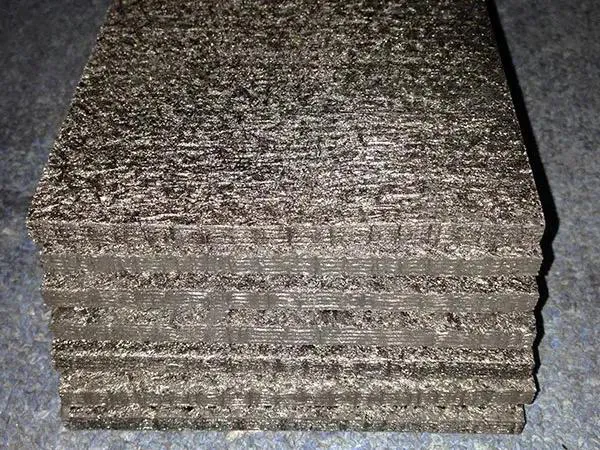
Choose High-Purity Graphite When:
Your process runs in vacuum or inert gas
Mechanical loads are low to moderate
Purity and contamination control are critical
You need cost-effective and easily machinable components
Typical uses include:
Heating elements and insulation
Semiconductor processing fixtures
Sintering trays
Choose Carbon-Carbon Composites When:
Components face high mechanical stress at elevated temperatures
Thermal cycling is frequent and aggressive
Long service life is required to reduce downtime
Structural integrity is critical for safety and precision
Typical uses include:
Load-bearing furnace fixtures
Aerospace heat treatment components
High-performance braking systems (outside furnaces as well)
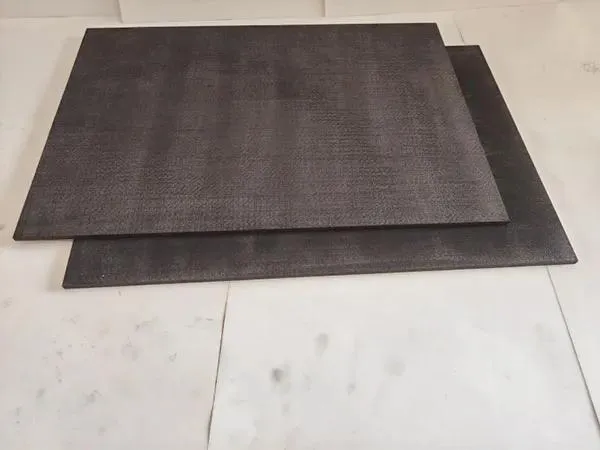
Instead of choosing one material for all applications, many advanced heat treatment facilities adopt a hybrid approach. Engineers use graphite for non-load-bearing or high-purity zones and deploy carbon-carbon composites in structural or high-stress areas.
This balanced strategy reduces overall cost while maximizing performance and reliability.
There is no universal “better” material between high-purity graphite and carbon-carbon composites. The right choice depends on your specific process conditions, performance expectations, and budget constraints.
If your priority is purity, cost-efficiency, and ease of machining, high-purity graphite remains a proven solution. If your operation demands durability, strength, and resistance to extreme thermal stress, carbon-carbon composites provide a clear advantage.
A well-informed material selection not only improves furnace performance but also reduces maintenance frequency, enhances product quality, and ultimately increases your return on investment.

 Russian