E-Mail:kb@czgraphite.com
Tel:+86 15533739372


Graphite news is mainly for industry users to share graphite materials and products and other related technical information, so that customers can keep abreast of industry trends and developments.
Time: 2026-06-01 02:36:52 Source: Cangzhou Carbon Technology Co., Ltd.
In high-temperature melting processes, crucible failure is not just a maintenance issue—it directly impacts production continuity, energy efficiency, and material quality. Silicon carbide (SiC) coated crucibles have gained significant traction because they consistently deliver 3–5 times longer service life than uncoated alternatives. But what exactly makes the coating so effective? This article breaks down the material science and engineering principles behind SiC-coated crucibles, helping you make an informed procurement decision. Cangzhou Carbon specializes in manufacturing these advanced crucibles for demanding industrial applications.
A crucible's life is primarily limited by three failure mechanisms: thermal shock cracking, chemical erosion from molten metals or fluxes, and mechanical abrasion from charge materials. Silicon carbide coatings address all three simultaneously by creating a dense, chemically inert barrier on the crucible surface.
Silicon carbide has a thermal conductivity of approximately 120 W/(m·K) at room temperature, significantly higher than typical clay-graphite or alumina crucibles (15–30 W/(m·K)). This high conductivity evenly distributes heat across the crucible wall, reducing localized thermal gradients that cause cracking. Moreover, the coating's coefficient of thermal expansion (CTE) closely matches that of the base substrate—often a carbon-bonded silicon carbide or clay-graphite body—minimizing interfacial stress during rapid heating or cooling cycles. Reduced thermal stress directly translates to fewer micro-cracks and longer operational life.
Molten metals such as aluminum, copper, and zinc contain aggressive fluxes (e.g., chlorides, fluorides) that chemically attack the crucible's binder phase. Uncoated crucibles suffer from progressive penetration of these fluxes into the porous structure, leading to spalling and weight loss. The SiC coating, applied via a specialized slurry or CVD process, forms a non-wettable, impermeable layer that resists chemical dissolution. Even at 900°C molten aluminum contact, the coating maintains its integrity, as confirmed by numerous industrial test reports.
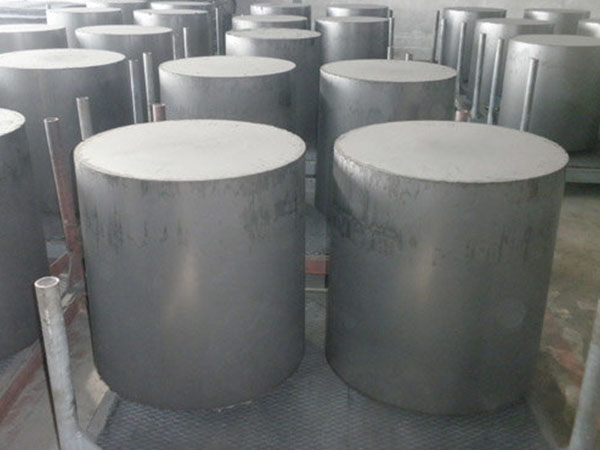
The graph below summarizes typical failure rates observed in non-ferrous melting foundries. Cangzhou Carbon's internal testing shows consistent trends:
| Failure Mechanism | Uncoated Crucible (Avg. Life 30–45 days) | SiC-Coated Crucible (Avg. Life 120–180 days) |
| Thermal shock cracking | 40% of failures | 15% of failures |
| Chemical erosion / pitting | 35% of failures | 10% of failures |
| Mechanical abrasion / wear | 15% of failures | 30% of failures (still tolerable) |
| Other (oxidation, deformation) | 10% of failures | 45% of failures (end-of-life wear-out) |
The data clearly shows that the coating shifts failure from early catastrophic cracking/erosion to gradual mechanical wear, enabling predictable replacement schedules. Cangzhou Carbon optimizes coating thickness (typically 0.5–1.5 mm) to balance cost and longevity for specific melting applications.
A longer-lasting crucible doesn't just mean less frequent replacement—it also maintains higher thermal efficiency throughout its life. Uncoated crucibles lose 5–8% of thermal performance due to surface roughening and scaling after only 20 cycles. SiC-coated crucibles retain smooth, clean surfaces for over 100 cycles, translating to 3–5% lower energy costs per ton of melted metal. In a medium-sized foundry melting 500 tons of aluminum annually, this represents $8,000–$12,000 in electricity savings.
Unexpected crucible failure can halt production for 4–8 hours while the cooled furnace is drained, cleaned, and refitted. With an average downtime cost of $500–$1,500 per hour (depending on labor and lost throughput), a single break can cost thousands. SiC-coated crucibles, by virtue of their predictable wear pattern and superior crack resistance, reduce emergency shutdowns by 60–70%, as reported by users of Cangzhou Carbon products.
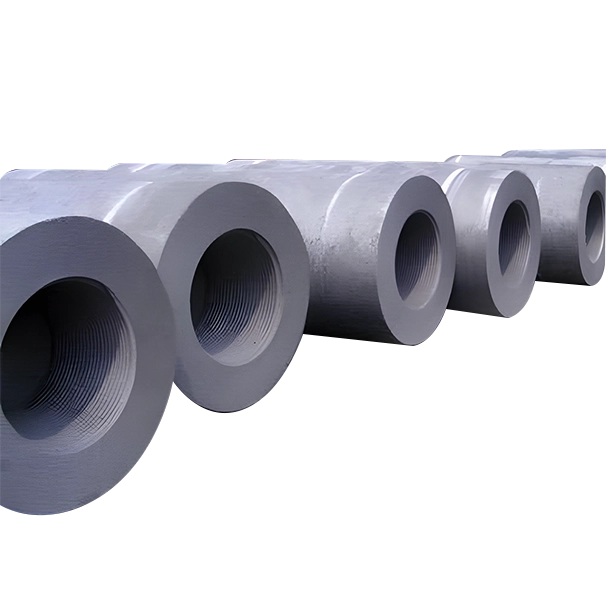
A mid-size brass foundry in Shandong Province replaced their standard clay-graphite crucibles with Cangzhou Carbon SiC-coated versions in 2023. Over 12 months of operation:
These figures demonstrate that the initial premium for SiC coating is recovered multiple times over through extended service life and operational savings.
Silicon carbide coated crucibles last longer because they address the root causes of premature failure: thermal shock, chemical attack, and surface degradation. The high thermal conductivity of SiC reduces stress, the chemical inertness blocks corrosion, and the dense coating preserves crucible integrity over hundreds of heating cycles. For any foundry or melting facility seeking to lower total cost of ownership, improve product quality, and minimize downtime, adopting SiC-coated crucibles from a reliable manufacturer like Cangzhou Carbon is a data-backed decision. Evaluate your current crucible life, energy bills, and scrap rates—the savings may surprise you.

 Russian