E-Mail:kb@czgraphite.com
Tel:+86 15533739372


Graphite news is mainly for industry users to share graphite materials and products and other related technical information, so that customers can keep abreast of industry trends and developments.
Time: 2026-10-05 02:36:39 Source: Cangzhou Carbon Technology Co., Ltd.
When selecting a graphite crucible for high-temperature melting processes, one critical parameter often determines both thermal performance and operational cost: wall thickness. Many operators assume thicker walls mean longer life, while others prioritize thin walls for faster heating. The reality is more nuanced. Wall thickness directly influences heat transfer rates, thermal uniformity, energy consumption, and crucible longevity. Understanding these relationships empowers engineers and purchasers to make informed decisions that optimize melting efficiency without sacrificing durability. This article explores the physics behind wall thickness, compares thin-wall versus thick-wall designs, and provides actionable guidance for matching crucible geometry to specific furnace types and materials.
Graphite’s high thermal conductivity (typically 100–150 W/m·K) makes it an excellent heat transfer medium. However, a crucible wall acts as both a conductor and a thermal mass. Thicker walls increase the total thermal mass, requiring more energy to raise the wall temperature to the desired level. This latent heat absorption delays the transfer of energy to the charge material, reducing the effective heating rate. Conversely, a thinner wall reduces thermal mass, allowing faster heat penetration and shorter cycle times.
Yet the relationship is not linear. While a 5 mm wall may heat to target temperature in 60% of the time required by a 10 mm wall, the thinner wall also reaches higher peak temperatures under the same power input, potentially accelerating oxidation and thermal shock. The key trade-off is between heating speed and structural robustness. For applications involving rapid thermal cycling, wall thickness must be carefully calculated to balance thermal response with mechanical integrity.
Heat from the furnace source (resistance elements or induction coils) first warms the crucible exterior. Conduction then moves heat through the wall to the interior surface, where it transfers to the charge via radiation and convection. A thicker wall increases the conductive path length, raising the temperature gradient across the wall. According to Fourier’s law, the thicker the wall, the lower the heat flux for a given temperature difference, all else being equal. This means thicker walls inherently reduce the maximum achievable heating rate.
The following comparison highlights the practical implications of wall thickness choices based on real-world operating conditions.
Thin-wall graphite crucibles are ideal for small batch melting, precious metals refining, and lab-scale operations where rapid heating and cooldown are prioritized. Induction furnaces, which generate heat directly in the charge, benefit from thin walls because the crucible itself does not need to store much energy. For example, melting gold or silver in a 5 mm wall crucible can reduce cycle time by up to 40% compared to a 10 mm wall, significantly increasing throughput.
Thick-wall crucibles (8–15 mm) are recommended for large-scale production, high-melting-point metals like steel or nickel alloys, and furnaces with aggressive oxidation environments. The added mass absorbs thermal shock during rapid loading and provides a greater oxidation allowance as the wall gradually erodes. For continuous operation, a thicker wall ensures stable performance over thousands of cycles, justifying the higher upfront cost.
To make the right choice, consider the following factors:
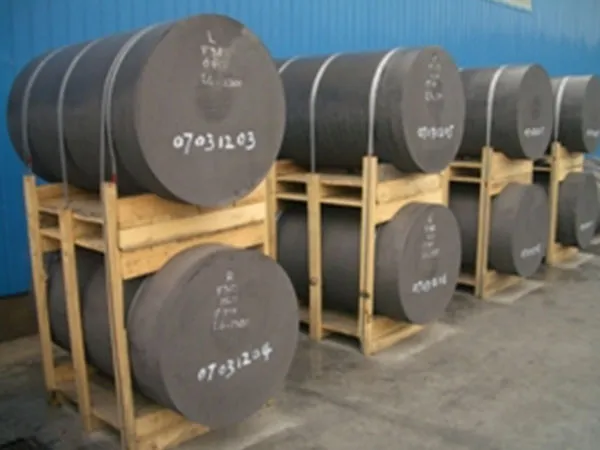
Cangzhou Carbon, a trusted manufacturer of high-purity graphite crucibles, offers a range of wall thickness options tailored to specific processes. Using advanced isostatic molding and consistent graphitization, each crucible is engineered to deliver predictable thermal behavior. Their technical team assists clients in selecting the ideal geometry based on furnace power, melt temperature, and planned throughput. Whether you need a 4 mm thin-wall crucible for induction melting of copper alloys or a 12 mm heavy-duty model for steel casting, Cangzhou Carbon provides certified quality with documented thermal conductivity and mechanical strength.
For non-standard applications, Cangzhou Carbon can produce crucibles with variable wall thickness (tapering) to concentrate heat where needed or reinforce high-wear zones. They also supply crucibles with protective coatings to reduce oxidation, allowing thinner walls without sacrificing life. This flexibility ensures that customers achieve the best balance of heating efficiency and durability for their exact conditions.
In summary, graphite crucible wall thickness is not a one-size-fits-all parameter. It directly impacts heating efficiency, energy cost, thermal uniformity, and crucible lifespan. By understanding the physics and evaluating your specific operating parameters, you can select a crucible that optimizes both performance and economy. Partnering with an experienced supplier like Cangzhou Carbon ensures access to expert guidance and consistent quality, helping you get the most from your melting operations.
