E-Mail:kb@czgraphite.com
Tel:+86 15533739372

Graphite news is mainly for industry users to share graphite materials and products and other related technical information, so that customers can keep abreast of industry trends and developments.
Time: 2026-07-20 02:36:06 Source: Cangzhou Carbon Technology Co., Ltd.
When laboratory research demands precision, consistency, and reliability at elevated temperatures, the choice of crucible material becomes a critical factor that can significantly affect experimental outcomes. High-purity graphite crucibles have emerged as the preferred containment vessel for a wide range of high-temperature applications, from metal melting and alloy synthesis to thermal analysis and sample preparation. Unlike standard-grade graphite, high-purity variants (typically with carbon content exceeding 99.99%) eliminate the risk of contamination and ensure reproducible results. In this article, we explore why high-purity graphite crucibles are indispensable for modern lab research, highlight the key advantages offered by Cangzhou Carbon, and provide a practical guide to selecting the right crucible for your specific needs.
The integrity of any high-temperature experiment hinges on the purity of the containment vessel. Even trace amounts of metallic or inorganic impurities can leach into the sample, skewing analytical data or catalyzing unintended reactions. High-purity graphite crucibles—typically manufactured from synthetic graphite with total ash content below 50 ppm—provide an inert, non-contaminating environment that preserves the chemical composition of the sample.
For techniques such as inductively coupled plasma mass spectrometry (ICP-MS) or atomic absorption spectroscopy (AAS), crucible blanks must introduce no detectable interference. Standard graphite crucibles often contain residual metals like iron, silicon, or aluminum, which can generate background signals. High-purity crucibles, such as those produced by Cangzhou Carbon under strict quality control, undergo a purification process (often via high-temperature halogenation) to reduce impurity levels to parts-per-million or even parts-per-billion ranges. This ensures that the crucible itself does not become a variable in your results.
Laboratory processes frequently involve rapid heating and cooling cycles, extreme temperatures (up to 3000°C in inert atmospheres), and aggressive chemical environments. High-purity graphite exhibits superior thermal shock resistance due to its low coefficient of thermal expansion and high thermal conductivity. Additionally, when used in vacuum or protective atmosphere, high-purity graphite crucibles maintain structural integrity without cracking or spalling, which is essential for reproducible melt preparation and solid-state reactions.
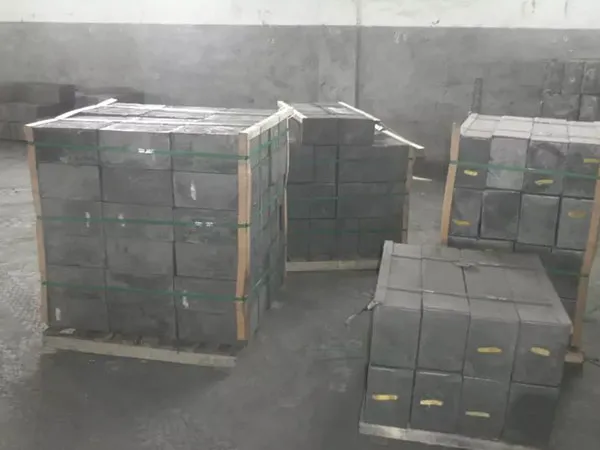
Cangzhou Carbon has established itself as a reliable supplier for laboratory-grade graphite crucibles through decades of manufacturing expertise. Their products are engineered to meet the rigorous demands of scientific research. Below are the standout features that differentiate Cangzhou Carbon crucibles from commodity alternatives:
The versatility of high-purity graphite crucibles makes them essential across numerous research domains. Understanding where they excel can help you decide if this material is right for your workflow.
In metallurgical labs, high-purity graphite crucibles are used for melting small quantities of ferrous and non-ferrous metals, including platinum, gold, silver, and rare earth elements. The crucible’s resistance to wetting by molten metals facilitates clean pouring and minimizes material loss.
Thermogravimetric analysis and differential thermal analysis require sample pans or crucibles that do not react with the sample or decompose at high temperatures. High-purity graphite crucibles provide a stable baseline and wide temperature range, making them ideal for studying decomposition kinetics, phase transitions, and oxidation behavior.
Solid-state sample preparation techniques, such as fusion with lithium tetraborate for X-ray fluorescence (XRF) analysis, often use graphite crucibles as disposable or reusable containers. The high thermal conductivity of graphite ensures rapid, uniform heating, while its chemical inertness prevents contamination of the flux or sample.
In advanced materials research, high-purity graphite crucibles serve as substrates or containers for growing single crystals (e.g., silicon carbide or gallium nitride) via CVD. The crucible must not introduce impurities that could act as nucleation sites or dopants.
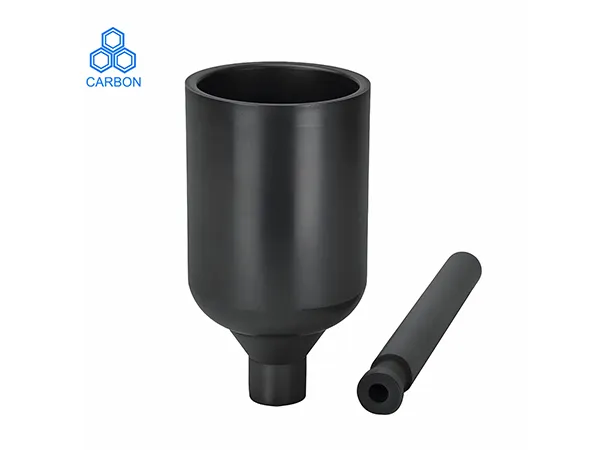
Selecting a high-purity graphite crucible involves evaluating several parameters beyond just purity. Consider the following factors to ensure optimal performance:
In conclusion, high-purity graphite crucibles are a cornerstone of reliable laboratory research at extreme temperatures. Their unmatched purity, thermal stability, and versatility make them a wise investment for any lab pursuing accurate and repeatable results. By partnering with a trusted supplier like Cangzhou Carbon, researchers can access crucibles engineered to the highest standards, backed by years of material science expertise. Whether you are melting precious metals, conducting thermal analysis, or growing single crystals, choosing the right crucible is a decision that directly impacts data quality—and high-purity graphite remains the gold standard.

 Russian