E-Mail:kb@czgraphite.com
Tel:+86 15533739372


Graphite news is mainly for industry users to share graphite materials and products and other related technical information, so that customers can keep abreast of industry trends and developments.
Time: 2026-07-27 02:36:22 Source: Cangzhou Carbon Technology Co., Ltd.
Selecting the correct graphite crucible size is critical for efficient melting in foundries and casting operations. An improperly sized crucible can lead to wasted energy, incomplete melting, increased oxidation, and even safety hazards. Whether you are melting aluminum, brass, bronze, gold, silver, or ferrous metals, understanding the relationship between crucible capacity, furnace dimensions, and melt volume is essential. This guide provides a systematic approach to choosing the right crucible size, backed by industry standards and practical factors. Cangzhou Carbon, a trusted manufacturer of high-quality graphite crucibles, offers a range of sizes tailored to foundry and casting applications.
The crucible size directly affects melt quality, cycle time, and operational cost. A crucible that is too small requires multiple batches, increasing oxidation and reducing throughput. A crucible that is too large may not fit the furnace, or it may cause excessive thermal stress if only partially filled. Proper sizing ensures optimal heat transfer, reduces energy consumption, and extends crucible service life. For non-ferrous metals, the crucible should be filled to 80-90% of its rated capacity to allow for safe expansion and stirring. For ferrous metals, a higher safety margin is recommended due to higher melt temperatures. Cangzhou Carbon crucibles are designed with strict tolerances to meet these requirements.
Crucible size is often indicated by a model number that corresponds to a standard capacity in kilograms (kg) of aluminum or copper. For example, a No. 16 crucible typically holds 16 kg of aluminum. However, the working capacity is usually less—around 85-90% of rated capacity—to accommodate molten metal expansion and prevent overflow. Always check with the manufacturer's data sheet. Cangzhou Carbon provides clear capacity charts for each crucible model.
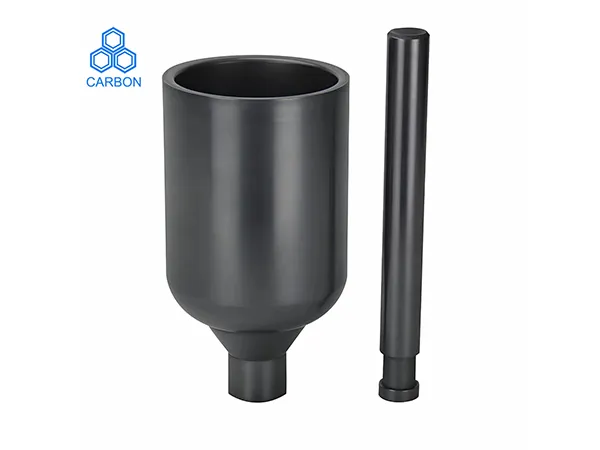
The three critical dimensions are top diameter (often matching the furnace opening), height (to ensure proper immersion in the furnace), and wall thickness (affects thermal shock resistance and weight). A crucible that is too tall may not fit the furnace lid; one that is too wide may not allow adequate clearance. Standard crucible shapes include A-shape (tapered), B-shape (straight wall), and bilge shape. A-shape crucibles are common for pit furnaces; B-shape for tilting furnaces. Cangzhou Carbon offers dimensional drawings for all models.
The following table (conceptual) illustrates typical crucible sizes used in foundries. Actual dimensions vary by shape and material composition. Cangzhou Carbon produces crucibles from No. 1 to No. 500 and beyond.
| Crucible No. | Aluminum Capacity (kg) | Copper Capacity (kg) | Top Diameter (mm) | Height (mm) |
|---|---|---|---|---|
| No. 10 | 10 | 8 | 160 | 180 |
| No. 16 | 16 | 13 | 180 | 200 |
| No. 30 | 30 | 24 | 210 | 230 |
| No. 60 | 60 | 48 | 260 | 280 |
| No. 100 | 100 | 80 | 320 | 350 |
Note: Always refer to Cangzhou Carbon's official dimension sheet for exact values.
While size is critical, the material and shape also influence performance. Here is a quick comparison of common crucible types:
For shape selection: A-shape crucibles are standard for stationary pit furnaces; B-shape with flat bottom is ideal for tilting furnaces; bilge shape provides maximum strength for large capacities. Cangzhou Carbon customizes crucibles to match specific furnace designs.
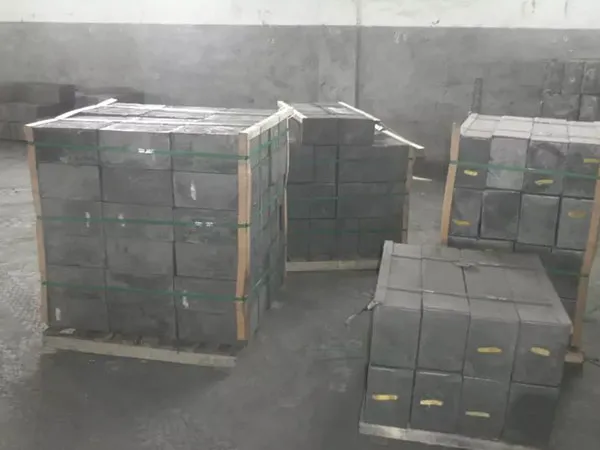
Cangzhou Carbon has over a decade of experience manufacturing graphite crucibles for foundries and casting facilities worldwide. Our crucibles are produced using high-purity graphite, advanced isostatic pressing technology, and strict quality control. We offer a complete size range from small laboratory crucibles to large industrial units (up to 1000 kg aluminum). Each crucible is tested for density, electrical resistivity, and thermal shock resistance. Our technical support helps you select the exact size and material for your application, ensuring maximum life and performance.
Yes, but you must adjust capacity based on metal density. For example, a No.16 crucible rated for 16 kg of aluminum will hold approximately 16 × (8.96/2.7) ≈ 53 kg of copper? No – the rated capacity is volume-based. Actually, a No.16 crucible rated for 16 kg aluminum (density 2.7 g/cm³) has a volume of about 5.9 liters. For copper (density 8.96 g/cm³), that same volume holds about 53 kg, but the crucible is not designed for such heavy weight – it could fail. Always consult the manufacturer for maximum safe weight.
Measure top outer diameter, overall height, and bottom diameter (if tapered). Also check the shape (A or B). Compare with Cangzhou Carbon's dimensional chart. If you cannot find a match, we can make a custom size.
It depends on temperature cycling, metal type, and handling. A clay-graphite crucible may last 15-30 heats for aluminum, while SiC crucibles can last 60-100+ heats. Proper preheating and avoiding thermal shock significantly extend life.
Selecting the right graphite crucible size requires careful consideration of furnace dimensions, metal type, batch volume, and safety margins. By following the guidelines in this article and referencing Cangzhou Carbon's detailed specifications, you can optimize your melting process for efficiency and cost. For personalized assistance, contact the Cangzhou Carbon team with your furnace details and production requirements. The right crucible size pays for itself through faster melt cycles, reduced waste, and longer crucible life.

 Russian