E-Mail:kb@czgraphite.com
Tel:+86 15533739372


Graphite news is mainly for industry users to share graphite materials and products and other related technical information, so that customers can keep abreast of industry trends and developments.
Time: 2026-08-10 02:36:22 Source: Cangzhou Carbon Technology Co., Ltd.
The Indonesian jewelry industry, a vibrant hub for gold, silver, and platinum craftsmanship, relies heavily on the quality of melting tools. Among these, graphite crucibles are indispensable for achieving precise temperature control and contamination-free melts. In recent years, a growing number of local jewelers have shifted their allegiance to a specific type of crucible. This article explores the technical and practical reasons why Indonesian jewelers increasingly choose graphite crucibles supplied by Cangzhou Carbon, a manufacturer known for its consistent quality and tailored solutions for precious metal applications.
In jewelry making, even trace impurities can compromise the color, luster, and malleability of precious metals. Indonesian jewelers, who often work with high-karat gold and fine silver, demand crucibles that do not introduce contaminants during melting.
Cangzhou Carbon’s graphite crucibles are manufactured from premium needle coke and high-purity graphite powder, resulting in a carbon content exceeding 99.9%. This minimizes the presence of ash and metallic impurities that could leach into molten metal. Independent lab tests show that typical impurity levels (e.g., iron, silicon, aluminum) remain below 50 ppm, far lower than many generic crucibles available in Southeast Asia.
To further protect melt quality, these crucibles feature a specialized anti-oxidation coating. This barrier prevents oxygen from reacting with the graphite surface at high temperatures, reducing the formation of carbon dust that can contaminate precious metal baths. Jewelers report noticeably cleaner slag and fewer inclusions when using Cangzhou Carbon crucibles compared to uncoated alternatives.
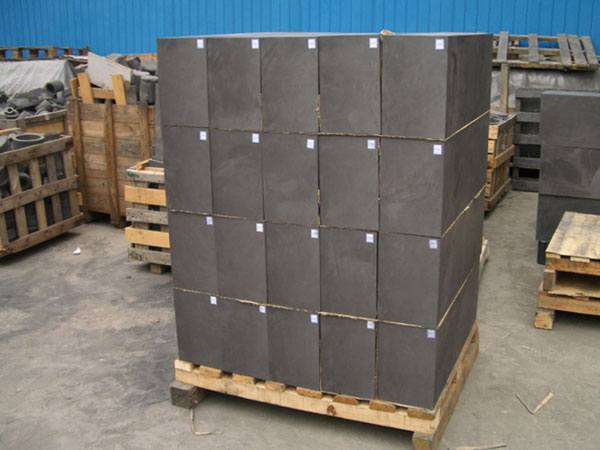
Indonesian workshops often operate under tight margins, making energy efficiency a critical factor. The thermal conductivity and heat retention of Cangzhou Carbon crucibles directly impact melting time and fuel costs.
Jewelers often subject crucibles to repeated thermal cycling—heating, pouring, cooling—which accelerates wear in inferior products. Durability is a decisive factor for workshops that cannot afford frequent replacements.
| Crucible Type | Average Lifespan (melts per crucible) | Failure Mode |
|---|---|---|
| Generic clay-graphite | 40–60 | Spalling, cracks |
| Cangzhou Carbon graphite | 120–180 | Gradual wall thinning |
This threefold lifespan improvement stems from the combination of fine grain size (15–20 µm) and optimized binder systems that resist thermal shock. Additionally, the crucibles maintain structural integrity even after 200+ hours at continuous operating temperatures of 1300°C—a common requirement for melting 18K gold alloys.
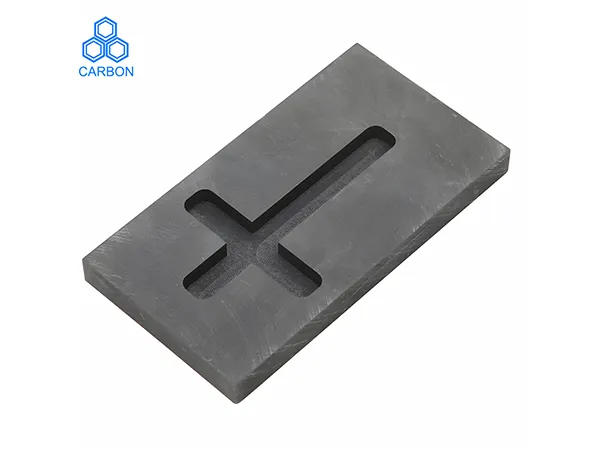
One size does not fit all when it comes to crucibles. Indonesian jewelers work with batch sizes ranging from 100 grams for custom pieces to 10 kilograms for mass production. Cangzhou Carbon offers a dimensional tolerance of ±1 mm on all standard graphite crucibles, with over 30 stock shapes available.
Whether using tilting gas furnaces, lift-out induction units, or fixed resistance furnaces, the crucible geometry must match the heating zone precisely. Cangzhou Carbon provides A-type (tall with tapered bottom), B-type (wide with flat bottom), and custom-angle crucibles to fit popular Indonesian furnace brands like Sinto, Topcast, and local fabrications.
Positioned strategically within the SE Asia logistics network, Cangzhou Carbon maintains a warehouse in Surabaya, offering 7–10 day delivery for standard orders. For urgent replacements, express shipments via Jakarta airport reach most islands within 3 days. This reliability is critical for jewelry businesses that cannot afford production downtime.
While the upfront price of premium graphite crucibles may be 25–40% higher than generic options, the total cost per melt is significantly lower when accounting for lifespan, energy savings, and reduced scrap.
These factors explain why Indonesian jewelry manufacturers, from small family workshops in Surakarta to large exporters in Jakarta, consistently prefer Cangzhou Carbon graphite crucibles over cheaper alternatives.
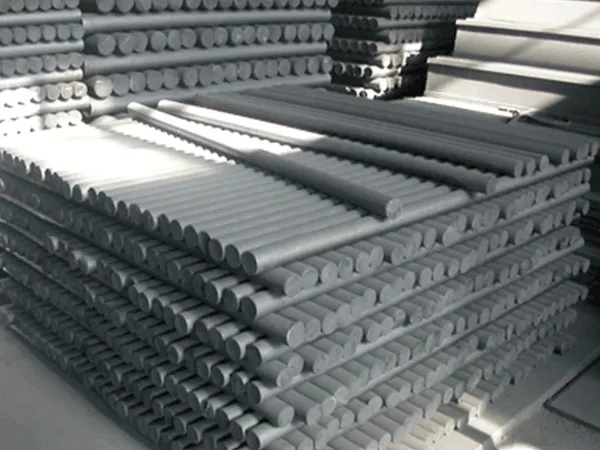
Indonesian jewelers choose these graphite crucibles not merely because of a brand preference, but because of quantifiable advantages in purity, thermal performance, durability, and total cost efficiency. Cangzhou Carbon’s dedicated product development for precious metal melting, combined with localized logistics support, positions it as the partner of choice for the growing Indonesian jewelry industry. As the market continues to expand, the technical and economic benefits of these crucibles will only become more pronounced, solidifying their place in Indonesia’s most demanding workshops.
Yes. Cangzhou Carbon offers a high-density grade (density ≥ 1.85 g/cm³) specifically formulated for high-temperature platinum group metals. The crucible can withstand up to 1600°C with proper ramp heating.
To maximize lifespan, we recommend pre-heating new crucibles gradually to 200°C for 30 minutes to remove any absorbed moisture. After that, standard heating cycles can be applied.
Standard sizes have no MOQ. For custom shapes or special coatings, the MOQ is typically 50 pieces per design.

 Russian