E-Mail:kb@czgraphite.com
Tel:+86 15533739372


Graphite news is mainly for industry users to share graphite materials and products and other related technical information, so that customers can keep abreast of industry trends and developments.
Time: 2026-05-19 03:36:21 Source: Cangzhou Carbon Technology Co., Ltd.
Vacuum furnace performance depends heavily on the stability and reliability of internal components, and material selection plays a decisive role in achieving consistent results. Many manufacturers and engineers choose isostatically pressed graphite because it delivers a balanced combination of purity, strength, and thermal stability under extreme conditions. This article explains why isostatically pressed graphite stands out, how it is used in vacuum furnace components, and what decision-makers should consider before sourcing it.
Isostatically pressed graphite is produced by applying uniform pressure to fine graphite powder in all directions during the forming process. This manufacturing method creates a highly uniform microstructure with minimal anisotropy. Compared with extruded or molded graphite, isostatic graphite offers superior density consistency, mechanical strength, and isotropic properties.
Manufacturers rely on this process when they need materials that can perform predictably in high-temperature and high-vacuum environments. The uniform grain structure ensures that the material behaves consistently regardless of orientation, which is critical for precision furnace components.
Vacuum furnaces operate in demanding environments that involve high temperatures, low pressure, and strict contamination control. Engineers must select materials that can withstand these conditions without degrading or introducing impurities.
Isostatically pressed graphite meets these requirements in several ways:
It provides excellent thermal conductivity, which helps maintain uniform temperature distribution.
It offers high resistance to thermal shock, allowing components to handle rapid heating and cooling cycles.
It ensures low outgassing rates, which protects the vacuum environment from contamination.
It maintains structural integrity at temperatures exceeding 2000°C in inert or vacuum atmospheres.
Because of these advantages, industries such as aerospace, metallurgy, semiconductor processing, and tool manufacturing widely adopt this material.
Engineers design a wide range of furnace components using isostatically pressed graphite. Each application benefits from the material’s stability and precision.
1. Heating Elements
Heating elements require materials that can withstand extreme temperatures without deformation. Isostatic graphite ensures stable resistance and long service life, which reduces downtime and replacement costs.
2. Insulation Components
Graphite felt and rigid boards made from isostatic graphite help improve thermal efficiency. These materials reduce heat loss and maintain energy efficiency inside the furnace chamber.
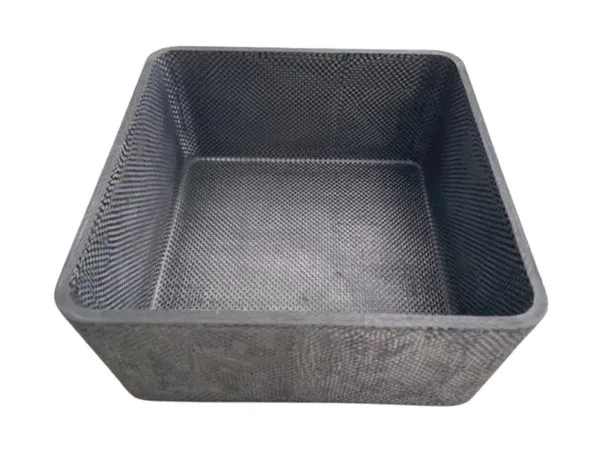
3. Fixtures and Trays
Furnace fixtures must support workpieces without warping or contaminating them. Isostatic graphite provides dimensional stability and chemical inertness, which ensures product quality.
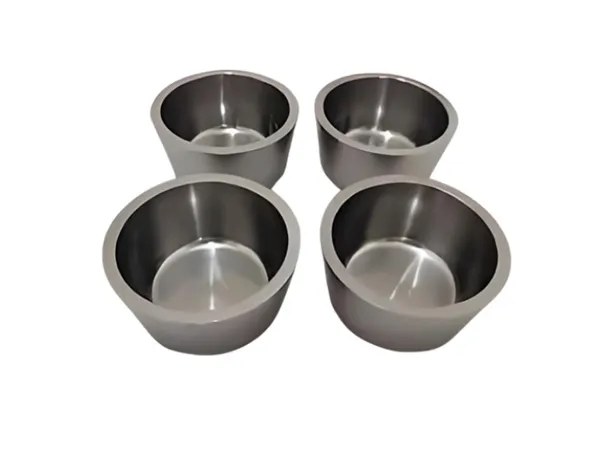
4. Crucibles
Crucibles used for melting or sintering benefit from graphite’s high purity and resistance to chemical reactions. Manufacturers prefer isostatic graphite for processes that require strict material integrity.
Not all graphite materials perform equally in vacuum furnace applications. Isostatically pressed graphite offers distinct advantages over extruded and molded graphite:
Uniform Density: The isotropic structure eliminates weak points and ensures consistent performance.
Higher Strength: Mechanical strength improves resistance to cracking and deformation.
Better Machinability: Fine grain structure allows precise machining for complex components.
Enhanced Purity: Controlled production processes reduce impurities that could affect sensitive applications.
These benefits directly translate into longer component life, improved furnace efficiency, and reduced operational risk.
Buyers should evaluate several factors when sourcing isostatically pressed graphite for vacuum furnace components. A well-informed decision reduces long-term costs and ensures operational stability.
Material Specifications
Buyers should verify density, grain size, ash content, and flexural strength. These parameters determine performance under thermal and mechanical stress.
Purity Level
High-purity graphite is essential for applications such as semiconductor processing or high-end metallurgy. Impurities can cause contamination and compromise product quality.
Supplier Capability
Reliable suppliers provide consistent quality, traceability, and technical support. Buyers should assess manufacturing capabilities, quality control systems, and experience in vacuum furnace applications.
Machining Precision
Many components require tight tolerances. Suppliers with advanced CNC machining capabilities can deliver ready-to-install parts, which reduces production complexity.
Even high-quality graphite components require proper maintenance to maximize their lifespan. Operators should avoid mechanical shocks, ensure proper installation, and monitor wear during operation.
Regular inspection helps identify early signs of oxidation or structural degradation. In controlled environments, isostatic graphite components can achieve long service cycles, which improves overall equipment efficiency.
As industries demand higher precision and cleaner processing environments, the need for advanced graphite materials continues to grow. Vacuum furnace technology is evolving toward higher temperatures, stricter purity requirements, and improved energy efficiency.
Isostatically pressed graphite will remain a key material because it meets these evolving demands. Manufacturers are also investing in improved purification techniques and microstructure control to enhance performance further.
Isostatically pressed graphite plays a critical role in the performance of vacuum furnace components. Its isotropic structure, high purity, and excellent thermal properties make it a preferred choice for demanding industrial applications.
Engineers and buyers who understand the material’s characteristics can make better sourcing decisions and improve furnace efficiency. Companies that invest in high-quality graphite components benefit from longer service life, reduced maintenance costs, and consistent production outcomes.
If your business relies on vacuum furnace technology, selecting the right graphite material is not just a technical choice—it is a strategic decision that directly impacts productivity and competitiveness.

 Russian