E-Mail:kb@czgraphite.com
Tel:+86 15533739372


Graphite news is mainly for industry users to share graphite materials and products and other related technical information, so that customers can keep abreast of industry trends and developments.
Time: 2026-08-31 02:36:21 Source: Cangzhou Carbon Technology Co., Ltd.
When selecting a graphite crucible for high-temperature melting applications, the tension between upfront cost and long-term performance often creates a difficult purchasing decision. Many buyers assume that a lower price automatically means acceptable performance, while others overpay for features they do not need. The reality is more nuanced: understanding the relationship between graphite crucible price vs performance requires a clear grasp of raw material quality, manufacturing processes, and application-specific demands. This article provides an evidence-based framework to help foundry professionals and industrial buyers make cost-effective choices that maximize production efficiency and crucible lifespan.
The price of a graphite crucible can range from a few dozen dollars for small laboratory units to several hundred dollars for large industrial crucibles designed for copper or aluminum melting. The primary cost drivers include:
Understanding these variables is essential before comparing price alone. A crucible that appears cheap may use low-grade graphite or skip critical quality controls, leading to early failure and higher total cost over time.
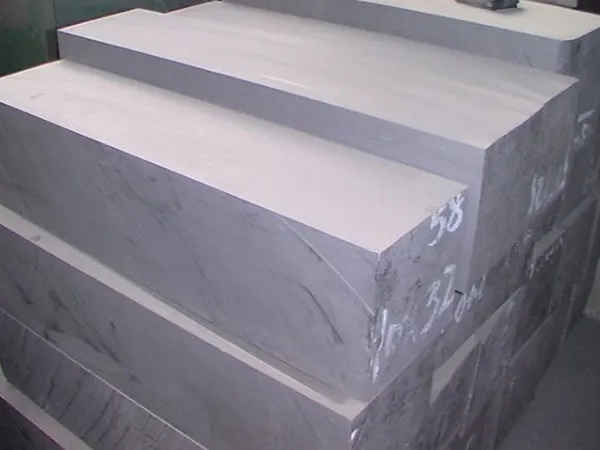
Performance in a graphite crucible is not a single number but a combination of properties that affect melting efficiency, safety, and longevity. The three most important indicators are:
High thermal conductivity enables faster heating and more uniform temperature distribution, reducing energy consumption and cycle times. Crucibles made from isostatic-pressed graphite typically achieve 120-150 W/mK, while extruded grades may fall to 80-100 W/mK. The price difference between these two categories is often 20-40%, but the energy savings across thousands of melt cycles can justify the investment.
The gradual oxidation of graphite at high temperatures (above 700°C in air) is the primary failure mode in most foundries. Crucibles with engineered surface coatings or denser microstructures resist oxidation up to 50% longer than standard grades. For example, a crucible from Cangzhou Carbon with our proprietary anti-oxidation treatment routinely delivers 80-100 melting cycles in brass foundries, whereas uncoated alternatives often need replacement after 40-50 cycles.
A crucible must withstand rapid temperature changes during preheating, charging, and pouring without cracking. High-quality crucibles undergo strict quality control tests for thermal shock resistance. Lower-priced options sometimes cut corners here, resulting in a higher risk of catastrophic failure that can damage furnaces and endanger operators.
Not every application demands the highest-performance crucible. The key is matching the product to your specific melting conditions. Consider the following comparative table:
| Application | Recommended Crucible Type | Typical Price Premium | Performance Advantage |
|---|---|---|---|
| Low-melting-point metals (e.g., zinc, lead) | Standard extruded graphite | Baseline | Sufficient for temperatures below 600°C |
| Aluminum alloys (700-800°C) | Isostatic-pressed with basic coating | +30% | Better thermal shock resistance, 20% longer life |
| Copper, bronze, brass (1000-1200°C) | High-density isostatic with anti-oxidation coating | +50-60% | Up to 2x lifespan, reduced dross formation |
| Steel, superalloys (above 1300°C) | Specialty high-purity graphite + ceramic coating | +80-100% | Essential for extreme temperatures, prevents contamination |
When evaluating options, always calculate total cost per melt cycle rather than unit price. A crucible costing $200 that lasts 80 cycles is more economical than a $100 crucible that fails after 30 cycles.
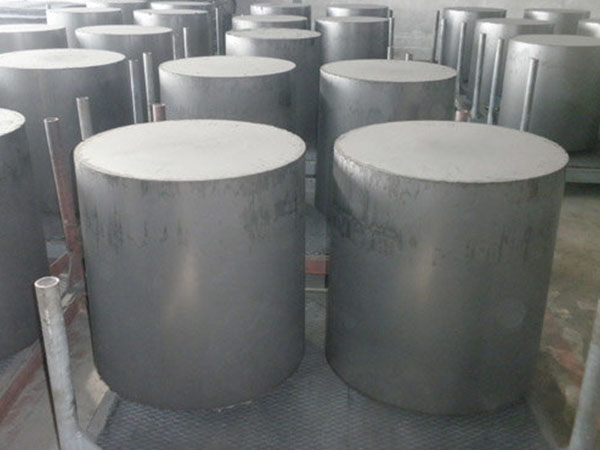
As a manufacturer with a decade of experience in graphite crucible production, Cangzhou Carbon focuses on delivering products that strike an optimal balance between cost and durability. Our approach includes:
By avoiding both over-engineering and corner-cutting, we help customers achieve the lowest total cost of ownership. For many medium-temperature foundries, our standard isostatic crucibles outperform extruded alternatives while remaining competitively priced.
Only in very low-temperature, non-critical applications where a short lifespan is acceptable. For any commercial production, the savings from a cheap crucible are usually lost through frequent replacements and downtime.
Request independent test reports for thermal conductivity, bulk density, and oxidation weight loss. Reputable suppliers like Cangzhou Carbon provide this data upon request. Also ask for references from customers running similar applications.
In copper melting, a high-performance crucible that costs 50% more but lasts twice as long yields a 33% reduction in per-cycle crucible cost. Add energy savings from faster heating, and the ROI period is often under three months.
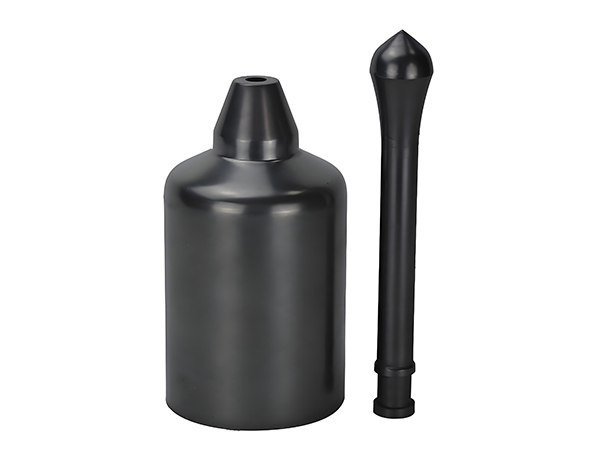
The choice between graphite crucible price and performance does not have to be a compromise. By understanding the material science behind crucible manufacturing and evaluating your specific melting conditions, you can select a product that delivers the best value. Start by listing your maximum operating temperature, metal type, and expected daily melt cycles. Then compare options from trusted manufacturers such as Cangzhou Carbon, focusing on total cost per use rather than upfront price. This disciplined approach will protect your furnace, your operators, and your bottom line.

 Russian