E-Mail:kb@czgraphite.com
Tel:+86 15533739372


Graphite news is mainly for industry users to share graphite materials and products and other related technical information, so that customers can keep abreast of industry trends and developments.
Time: 2026-01-09 03:22:00 Source: Cangzhou Carbon Technology Co., Ltd.
In modern aluminum processing—from alloy casting to heat treatment—every detail in the production chain directly impacts the stability, strength, and long-term reliability of the final product. Among all equipment used in this process, the graphite crucible plays a crucial yet often overlooked role. A well-designed custom graphite crucible not only ensures stable melting conditions but also helps manufacturers achieve better temperature control, reduced waste, and improved product consistency.
As industries continue upgrading toward higher efficiency and precision, custom graphite crucibles are becoming a preferred choice for aluminum processors looking to enhance reliability and reduce operational costs.
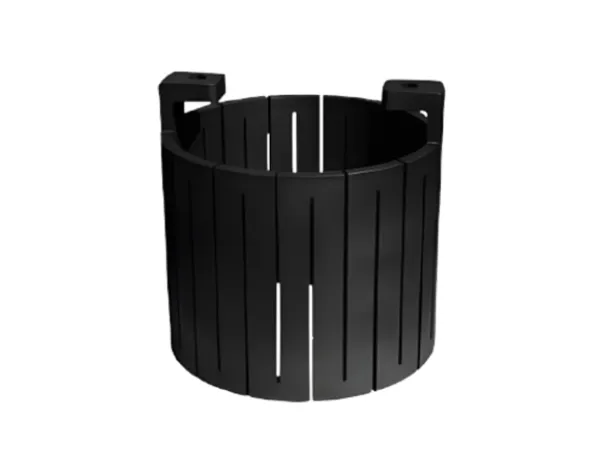
Graphite crucibles have long been used in high-temperature environments, but several inherent material characteristics make them especially suitable for aluminum melting and heat treatment.
1. Superior Thermal Conductivity for Uniform Heating
Graphite naturally transfers heat efficiently. During aluminum melting, this allows the crucible wall to heat evenly, minimizing temperature gradients and eliminating hotspots. Uniform heating is essential for aluminum alloys, which are sensitive to fluctuations that can cause inconsistent microstructures or weakened mechanical properties.
2. High Temperature Durability
Aluminum requires processing temperatures above 660°C. In many cases—especially during alloy preparation—temperatures may need to be maintained for extended periods. Graphite crucibles can withstand these conditions without deforming, cracking, or oxidizing rapidly. This durability translates into fewer replacements and more stable furnace operation.
3. Chemical Inertness to Ensure Metal Purity
One of the major concerns during aluminum melting is contamination. Graphite does not react with aluminum or its alloys, helping preserve the purity and stability of the melt. For industries such as aerospace, automotive, and electronics, where material performance is critical, even slight contamination can lead to product defects. A stable and inert crucible material reduces this risk significantly.
4. Custom Engineering for Better Production Fit
Unlike standardized metal or ceramic crucibles, graphite crucibles can be designed according to the specific needs of your operation:
Tailored dimensions for exact furnace fit
Specially shaped pouring lips for smoother casting
Reinforced bases for longer service life
Optimized wall thickness to balance strength and heating efficiency
Customization allows manufacturers to enhance process control and reduce aluminum waste caused by poor melt flow or improper crucible geometry.
Choosing the right custom graphite crucible requires more than simply selecting a material. These essential considerations help ensure long-term performance and operational efficiency:
1. Crucible Size and Capacity
Match the crucible capacity with actual production needs. Oversized crucibles lead to unnecessary energy consumption, while undersized ones risk overflow, uneven heating, or metal loss.
2. Graphite Purity Level
High-purity graphite reduces the chance of introducing impurities. It also enhances the crucible’s thermal conductivity and improves its resistance to oxidation—critical in repeated high-temperature use.
3. Additional Coatings and Surface Treatments
Some custom crucibles come with special anti-oxidation coatings, protective films, or improved surface finishes. These upgrades can:
extend crucible lifespan
prevent aluminum adhesion
reduce manual cleaning frequency
improve melt release during pouring
4. Furnace Compatibility and Operating Method
Before selecting a crucible, evaluate its compatibility with your heating source:
Induction furnace: requires proper induction-friendly crucible design
Resistance furnace: benefits from uniform wall thickness
Gas-fired furnace: needs a crucible with strong oxidation resistance
A compatible crucible helps achieve stable thermal performance and reduces unnecessary energy consumption.

Today’s aluminum industry relies on graphite crucibles across a wide range of production stages. Some common applications include:
Aerospace & Automotive Manufacturing
Aluminum alloys used in high-performance components—engine housings, structural brackets, aerospace fittings—require extremely consistent heating to maintain reliability and fatigue resistance.
Metal Foundries and Casting Workshops
Graphite crucibles simplify molten aluminum handling, secure stable pouring, and improve overall casting quality in both batch and continuous casting operations.
Extrusion and Rolling Mills
In extrusion and rolling, the melt quality must be controlled before further processing. A stable melting environment ensures predictable flow behavior and better end-product performance.
Investing in a custom graphite crucible is more than just selecting a consumable—it is a step toward upgrading production capacity and precision. With better heat uniformity, improved durability, and zero chemical reactivity with aluminum, graphite crucibles help manufacturers:
Achieve consistent product quality
Optimize furnace performance
Reduce long-term maintenance costs
Improve overall process reliability
For companies seeking to enhance their aluminum heat treatment workflow, a well-designed custom graphite crucible is a practical and forward-looking solution that delivers both efficiency and precision.

 Russian