E-Mail:kb@czgraphite.com
Tel:+86 15533739372


Graphite news is mainly for industry users to share graphite materials and products and other related technical information, so that customers can keep abreast of industry trends and developments.
Time: 2026-03-11 02:57:18 Source: Cangzhou Carbon Technology Co., Ltd.
In the field of metal casting, the pursuit of superior surface quality is always a priority for manufacturers aiming to produce precision components. Among the various factors influencing surface finish, the choice of graphite mold and, more specifically, its grain size, plays a crucial role in determining the final quality of cast metal products. This article explores how graphite mold grain size affects surface finish and provides insights into optimizing casting processes for both aesthetic appeal and functional performance.

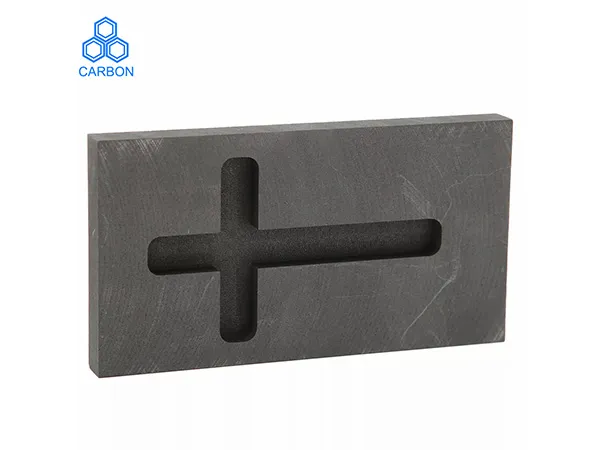
Graphite molds have long been favored in the metal casting industry due to their exceptional thermal conductivity, chemical stability, and non-reactivity with molten metals. These properties allow graphite molds to withstand high temperatures without degradation while facilitating uniform heat distribution during solidification. However, the internal structure of the graphite, particularly the grain size, introduces subtle but significant variations in how molten metal interacts with the mold surface.
Graphite mold grains vary from ultra-fine to coarse, and this variation influences the texture imparted to the cast metal. Fine-grained graphite offers a smoother, more uniform mold surface, whereas coarse-grained graphite can result in a rougher texture due to the larger and more irregular surface asperities present in the mold.
Surface finish refers to the microscopic texture of a cast product, which can influence not only the visual quality but also the functional properties such as friction, wear resistance, and coating adhesion. When molten metal is poured into a graphite mold, it conforms closely to the mold's surface profile. Therefore, any irregularities or grain patterns on the graphite surface are transferred directly onto the cast metal.
Fine-Grained Graphite
Fine-grained graphite molds are characterized by closely packed, small graphite crystals. This structure provides a nearly uniform and smooth mold surface, which minimizes the transfer of surface defects to the metal. As a result, cast products produced in fine-grained molds exhibit superior surface finish with reduced porosity and minimal roughness. Such molds are particularly suitable for applications requiring high dimensional accuracy and minimal post-processing, such as aerospace components or precision engineering parts.
Medium-Grained Graphite
Medium-grained graphite molds offer a compromise between mold durability and surface smoothness. While they provide acceptable surface quality for many industrial components, the slightly larger grains can introduce subtle texture variations that may necessitate secondary finishing operations such as machining or polishing. Medium-grained molds are often chosen for components where mechanical properties are prioritized over cosmetic appearance.
Coarse-Grained Graphite
Coarse-grained graphite molds contain larger, more pronounced graphite crystals that create an inherently rougher mold surface. When molten metal fills such a mold, the resulting cast surface may exhibit pronounced grain patterns, minor pits, or micro-porosities. While this rougher texture can be detrimental for high-precision applications, it may be advantageous for parts that require better adhesion for coatings, paints, or bonding processes. Additionally, coarse-grained graphite is generally more cost-effective and provides greater mold longevity under extreme thermal cycling.
While graphite grain size is a primary factor, several other elements can amplify its impact on surface finish:
Metal Type and Fluidity: Metals with higher fluidity, such as aluminum and copper alloys, can better adapt to the mold surface, reducing the visible effect of coarser grains. Conversely, high-viscosity metals may exaggerate surface irregularities.
Pouring Temperature: Overheating or underheating molten metal can affect surface wetting and result in defects. Proper temperature control ensures that the metal faithfully reproduces the mold surface.
Mold Preparation: Surface treatments, polishing, or coating of graphite molds can mitigate the effects of coarser grains, enhancing surface finish without switching to fine-grained materials.
For manufacturers seeking the optimal balance between cost, durability, and surface quality, careful selection of graphite grain size is essential. Fine-grained molds are ideal for high-precision, visually critical applications, albeit at a higher cost and slightly reduced mold lifespan. Coarse-grained molds offer durability and lower cost but may require additional post-casting finishing operations.
Moreover, combining appropriate mold surface treatments, controlled pouring techniques, and proper metal selection allows manufacturers to maximize the advantages of any graphite mold grain size. Advanced simulations and mold inspection technologies further assist in predicting surface outcomes, reducing trial-and-error iterations and improving overall efficiency.

The grain size of graphite molds is a subtle yet decisive factor influencing the surface finish of cast metal products. Understanding how fine, medium, and coarse graphite grains interact with molten metal enables foundries to select the most suitable mold type for each application, achieving the desired balance between surface quality, cost, and production efficiency. By carefully considering graphite grain characteristics alongside process parameters, manufacturers can enhance product performance, minimize defects, and reduce the need for secondary finishing, ultimately driving greater customer satisfaction and operational success.
In the competitive landscape of modern casting, knowledge of graphite mold grain size versus surface finish is not merely academic—it is a practical tool for improving product quality, shortening lead times, and optimizing manufacturing processes. Foundries that master this relationship are better positioned to deliver high-quality castings that meet both functional and aesthetic demands in today’s demanding industrial environment.

 Russian