E-Mail:kb@czgraphite.com
Tel:+86 15533739372


Graphite news is mainly for industry users to share graphite materials and products and other related technical information, so that customers can keep abreast of industry trends and developments.
Time: 2026-03-05 03:30:17 Source: Cangzhou Carbon Technology Co., Ltd.
In the demanding and precision-driven world of continuous casting, the performance of graphite molds is a critical determinant of both product quality and operational efficiency. Graphite continuous casting molds are highly valued for their exceptional thermal conductivity, dimensional stability, and ability to withstand high temperatures. However, despite their advantages, they are inherently vulnerable to wear, chemical corrosion, and thermal fatigue. Over time, repeated exposure to molten metal, rapid temperature fluctuations, and abrasive forces leads to surface degradation, compromising mold integrity and forcing frequent replacements. Such interruptions are not only costly but also create significant production inefficiencies, particularly in high-volume foundries and metal processing facilities.
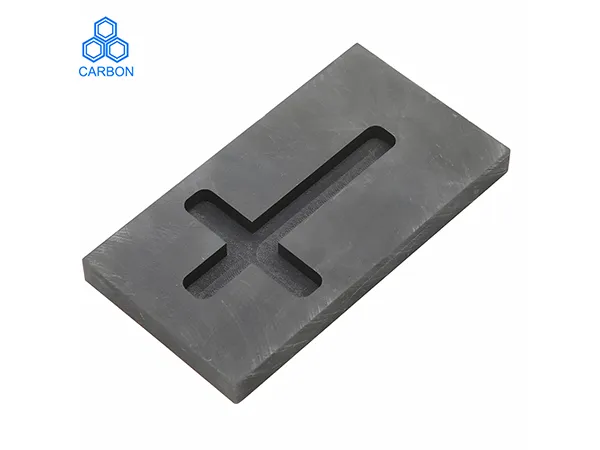
Nano-coating technology offers a groundbreaking solution to these long-standing challenges. By applying an ultra-thin layer of nanomaterials onto the surface of graphite molds, manufacturers can create a protective shield that operates at the molecular level. Unlike traditional surface treatments, which may crack, peel, or lose effectiveness under extreme heat, nano-coatings form a uniform, resilient barrier that maintains adhesion and structural integrity even under intense thermal cycling. This microscopic layer enhances surface hardness, improves thermal resistance, and prevents direct exposure of the graphite to reactive elements, significantly prolonging mold life.
The benefits of nano-coated graphite molds extend far beyond simple durability. By preserving the graphite's intrinsic thermal conductivity while introducing a chemically resistant surface, nano-coatings reduce oxidation, minimize molten metal adhesion, and facilitate smoother metal flow. This translates into fewer casting defects, including surface porosity, uneven cooling, and micro-cracks. Improved mold performance directly enhances product consistency, reduces waste, and lowers costs associated with secondary processing or scrap handling. For high-throughput continuous casting operations, the cumulative effect is substantial: higher output, fewer stoppages, and predictable, uniform product quality.
Adopting nano-coating technology also aligns with sustainability and cost-efficiency goals. Frequent mold replacements generate significant graphite waste and require energy-intensive manufacturing processes. Extending mold lifespan not only decreases material consumption but also reduces energy use and labor costs associated with mold handling and installation. By minimizing downtime for mold changes, foundries can maintain continuous production schedules while lowering their environmental footprint. In an era where green manufacturing and resource optimization are increasingly important, nano-coated molds offer both ecological and economic benefits.
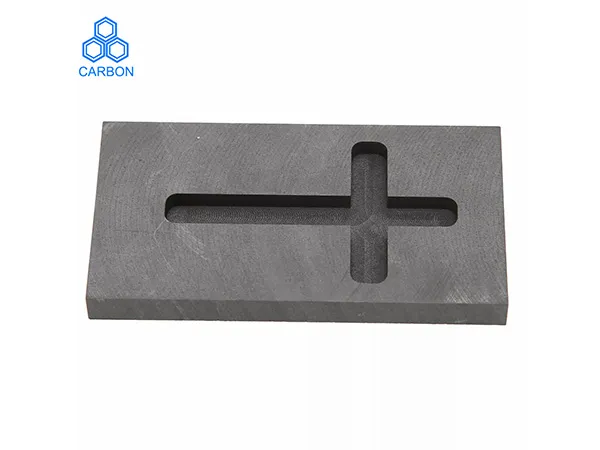
Selecting the right nanomaterial and application method is crucial to realizing these benefits. Commonly used materials include titanium nitride (TiN), zirconium oxide (ZrO₂), and diamond-like carbon (DLC), each offering a unique combination of hardness, thermal stability, and chemical resistance. Application techniques such as physical vapor deposition (PVD) or chemical vapor deposition (CVD) allow for precise, uniform coatings that can withstand the extreme thermal and mechanical conditions of continuous casting. Proper process control ensures strong adhesion, preventing delamination and preserving the protective barrier throughout extended production cycles.
Industry case studies have consistently demonstrated the transformative potential of nano-coatings. Foundries report that coated graphite molds can last three to five times longer than untreated counterparts, with significantly reduced maintenance requirements and lower scrap rates. Operators highlight improved ease of cleaning, as the non-stick surface prevents the accumulation of molten residues, and simplified handling, which reduces labor-intensive interventions. These operational advantages underscore the strategic value of integrating nano-coating technology into modern manufacturing workflows, shifting graphite mold management from reactive maintenance to proactive efficiency optimization.
As continuous casting operations scale up to meet global demand and stricter quality standards, the role of nano-coatings is poised to become increasingly essential. By addressing the persistent challenges of wear, oxidation, and thermal stress, this technology enables foundries to maximize equipment lifespan, reduce operational costs, and ensure consistent, high-quality outputs. In addition, the alignment of nano-coating adoption with sustainability initiatives provides a competitive advantage for companies seeking to balance performance with environmental responsibility.
Nano-coating technology represents more than a surface treatment—it is a paradigm shift in graphite mold management for continuous casting. By integrating material science innovations with practical manufacturing applications, it not only mitigates the limitations of traditional graphite molds but also enhances casting quality, operational efficiency, and sustainability. For industrial operations aiming to achieve maximum efficiency and product consistency, investing in nano-coated molds is no longer an optional upgrade—it is a strategic necessity. As the industry continues to push the boundaries of production scale and precision, the protective and performance-enhancing power of nanomaterials will define the next generation of continuous casting technology.

 Russian