E-Mail:kb@czgraphite.com
Tel:+86 15533739372

Graphite news is mainly for industry users to share graphite materials and products and other related technical information, so that customers can keep abreast of industry trends and developments.
Time: 2026-03-18 12:14:39 Source: Cangzhou Carbon Technology Co., Ltd.
In modern casting environments where consistency, efficiency, and cost control are under constant pressure, material selection is no longer a routine decision—it is a strategic one. Graphite, widely recognized for its high thermal conductivity, resistance to chemical attack, and ability to maintain structural integrity at extreme temperatures, continues to play a critical role in metal casting processes.
However, many procurement teams and engineers still underestimate a key point: graphite is not a uniform material. Its performance varies significantly depending on how it is manufactured. Choosing between isostatic graphite, molded graphite, and extruded graphite can directly impact mold life, casting accuracy, defect rates, and overall production cost.
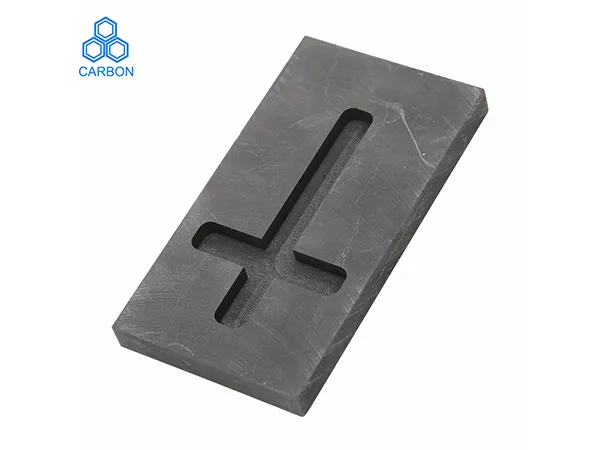
This guide provides a deeper, experience-based perspective to help decision-makers select the most suitable graphite type based on real production conditions rather than generic specifications.
In high-temperature casting processes—whether for aluminum, copper alloys, or special metals—graphite components such as molds, dies, crucibles, and fixtures are exposed to repeated thermal cycling, oxidation risks, and mechanical loads.
A mismatch between graphite type and application often leads to:
Premature cracking or deformation
Uneven heat distribution and casting defects
Increased downtime and maintenance costs
Reduced product consistency
From a practical standpoint, the right graphite choice is not just about performance—it’s about long-term operational stability and cost predictability.
1. Isostatic Graphite: Precision and Reliability Under Extreme Conditions
Isostatic graphite is manufactured using uniform pressure applied in all directions, resulting in a highly homogeneous internal structure. From an engineering perspective, this uniformity is what sets it apart.
In real-world applications, this translates to:
Consistent behavior in all directions
Unlike other graphite types, its properties do not vary based on orientation. This is critical in molds where uneven expansion can lead to dimensional inaccuracies.
Exceptional resistance to thermal shock
In repeated heating and cooling cycles, isostatic graphite maintains structural integrity, significantly extending mold service life.
High density and low porosity
This reduces metal penetration and improves surface finish quality of cast parts.
Because of these advantages, isostatic graphite is commonly used in:
Aerospace-grade casting molds
High-precision automotive components
Continuous casting dies for non-ferrous metals
Semiconductor and high-purity applications
Practical insight:
While the upfront cost is higher, many manufacturers find that isostatic graphite reduces total cost per casting cycle due to longer lifespan and fewer defects.
2. Molded Graphite: Balanced Performance for Versatile Applications
Molded graphite is produced by compressing graphite powder with binders into specific shapes, followed by high-temperature treatment. This process allows for flexibility in design while maintaining reasonable material performance.
From a production standpoint, molded graphite offers:
Good balance between strength and cost
It delivers sufficient mechanical and thermal performance for most standard casting applications.
Flexible shaping capabilities
It is easier to machine into complex geometries compared to extruded graphite.
Stable performance in medium-demand environments
While not as uniform as isostatic graphite, it performs reliably in many industrial scenarios.Typical applications include:
General casting molds
Crucibles and ladles
Die inserts
Small to medium batch production
Practical insight:
For foundries managing multiple product lines or frequent mold changes, molded graphite often provides the best balance between customization and budget control.
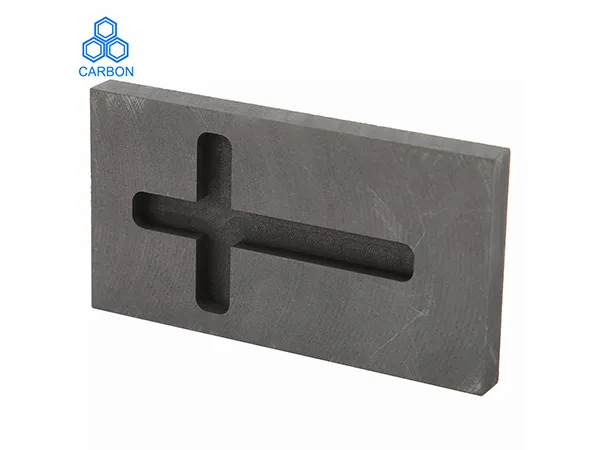
3. Extruded Graphite: Cost-Effective for Directional Applications
Extruded graphite is manufactured by pushing graphite material through a die, forming continuous shapes such as rods or plates. This process introduces directional properties, meaning the material behaves differently depending on orientation.
Key characteristics include:
Anisotropic structure (direction-dependent properties)
Strength and thermal conductivity are higher along the extrusion direction.
Efficient for standardized shapes
Ideal for large-scale production where uniform profiles are required.
Lower production cost
One of the most economical graphite options for bulk use.
In practice, extruded graphite is best suited for:
Structural supports in casting systems
Heat management components
Non-critical molds with predictable stress directions
Large-scale industrial applications with cost constraints
Practical insight:
Extruded graphite performs well when engineers design around its directional strengths. Misalignment, however, can lead to premature failure.
1. Dimensional Tolerance Requirements
If your casting process involves tight tolerances or high-value components, material stability becomes critical.
High precision → Isostatic graphite
Moderate precision → Molded graphite
Low precision / bulk → Extruded graphite
2. Thermal Management Needs
Uniform heat distribution directly affects metal flow and solidification.
Uniform heat transfer → Isostatic graphite
General thermal performance → Molded graphite
Directional heat control → Extruded graphite
3. Mechanical Stress and Lifecycle Expectations
Repeated thermal cycling can quickly expose material weaknesses.
High stress / long lifecycle → Isostatic graphite
Medium stress → Molded graphite
Controlled stress direction → Extruded graphite
4. Design Complexity and Machining Requirements
Complex molds often require materials that are easy to machine without compromising strength.
Complex geometries → Molded or isostatic graphite
Standard shapes → Extruded graphite
5. Cost vs. Long-Term Value
Many buyers focus on initial price, but experienced engineers evaluate cost per usable cycle.
High upfront, low long-term cost → Isostatic graphite
Balanced investment → Molded graphite
Low upfront, higher replacement frequency → Extruded graphite
Real-World Application Insights
Aerospace casting workshops typically prioritize isostatic graphite to avoid microscopic defects that could compromise safety-critical components.
Automotive suppliers often use molded graphite for engine and transmission components where production volume is high but tolerances are still controlled.
Large-scale metal processing plants rely on extruded graphite for structural and auxiliary components to reduce operational costs.
Selecting the right graphite material is not just a technical choice—it reflects your overall production strategy. Companies that align graphite selection with actual working conditions often achieve:
Longer mold service life
Improved casting consistency
Lower rejection rates
More predictable production costs
Instead of relying solely on datasheets, it is advisable to work closely with experienced graphite suppliers who can provide:
Material grade recommendations
Custom machining support
Application-based testing data
In competitive manufacturing environments, these insights can make a measurable difference.
Actionable Recommendation
If you are currently evaluating graphite materials for a casting project, start by asking three practical questions:
What is the acceptable tolerance range of my casting?
How many thermal cycles will the mold undergo?
Is my priority lower upfront cost or long-term efficiency?
The answers to these questions will usually point clearly to the most suitable graphite type.

 Russian