E-Mail:kb@czgraphite.com
Tel:+86 15533739372


Graphite news is mainly for industry users to share graphite materials and products and other related technical information, so that customers can keep abreast of industry trends and developments.
Time: 2026-03-24 03:03:46 Source: Cangzhou Carbon Technology Co., Ltd.
Graphite continuous casting molds play a decisive role in modern metallurgical production, especially in industries such as steelmaking, aluminum processing, and non-ferrous metal manufacturing. As a critical component directly exposed to molten metal, the mold not only determines the dimensional accuracy of billets and ingots but also significantly affects surface quality, production efficiency, and overall operational costs.
Manufacturers choose graphite materials because of their outstanding thermal conductivity, excellent resistance to thermal shock, and stable performance at elevated temperatures. However, despite these advantages, graphite molds are inherently vulnerable to two major degradation mechanisms: oxidation and erosion. If these issues are not effectively controlled, they can lead to rapid mold wear, inconsistent casting quality, and unplanned downtime.
This article provides a comprehensive and practical guide to understanding the root causes of oxidation and erosion in graphite molds, along with proven strategies that help extend service life and improve casting efficiency.
In continuous casting environments, graphite molds operate under extremely harsh conditions that involve high temperatures, molten metal flow, and exposure to reactive gases. Oxidation and erosion do not occur independently; in most cases, they interact and accelerate each other, leading to compounded damage.
When oxidation weakens the graphite structure, the material becomes more susceptible to mechanical wear. At the same time, erosion exposes fresh graphite surfaces, making them more vulnerable to further oxidation. This cycle can significantly shorten mold lifespan if not properly managed.
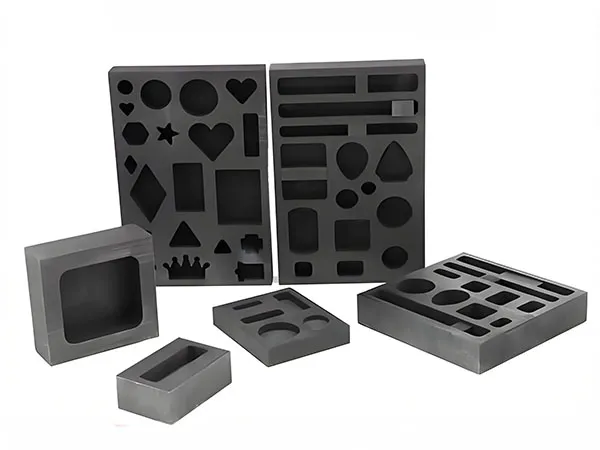
Oxidation is a chemical reaction in which carbon atoms in graphite combine with oxygen at high temperatures, forming carbon monoxide (CO) or carbon dioxide (CO₂). This reaction typically becomes significant when temperatures exceed 400–500°C and accelerates rapidly at casting temperatures.
Key Factors That Promote Oxidation
Several operational and environmental conditions contribute to oxidation:
High casting temperatures increase the reaction rate between graphite and oxygen
Extended exposure time during continuous production cycles
Oxygen-rich environments caused by poor sealing or inadequate gas protection
Airflow and humidity around the casting area, which introduce additional oxygen
As oxidation progresses, the mold surface gradually loses material, resulting in dimensional deviations, rough surfaces, and reduced thermal conductivity. In severe cases, structural integrity may be compromised, leading to premature mold failure.
Unlike oxidation, erosion is primarily a mechanical process. It occurs when molten metal, along with inclusions and impurities, flows across the mold surface and gradually removes material through friction and impact.
Main Causes of Erosion
High-velocity molten metal flow, especially in high-speed casting operations
Turbulence and unstable flow patterns inside the mold cavity
Presence of slag, oxides, or solid particles that act as abrasives
Improper casting parameters, such as excessive pouring speed
Over time, erosion leads to the formation of grooves, pits, and uneven surfaces. These defects disrupt heat transfer, negatively affect solidification behavior, and ultimately degrade the quality of the final product.
1. Application of High-Performance Protective Coatings
Protective coatings serve as the first line of defense against oxidation. By forming a barrier between graphite and oxygen, these coatings significantly reduce the reaction rate.
Common coating solutions include:
Boron nitride (BN) coatings, which offer excellent thermal stability and chemical inertness
Ceramic-based coatings, designed for high-temperature resistance
Anti-oxidation sprays, suitable for quick maintenance and reapplication
To ensure effectiveness, operators should implement a regular inspection schedule and reapply coatings before visible degradation occurs.
2. Controlled Atmosphere Protection
Reducing oxygen exposure is one of the most direct ways to limit oxidation. Many advanced casting facilities adopt controlled atmosphere techniques, such as:
Inert gas shielding (argon or nitrogen) around the mold area
Localized gas flow systems to protect critical zones
Sealed casting chambers to minimize air ingress
This approach is particularly beneficial in high-temperature and high-speed casting processes, where oxidation risks are significantly higher.
3. Optimized Cooling System Design
An efficient cooling system plays a dual role by stabilizing temperature and reducing thermal stress. Uneven temperature distribution often creates localized hotspots, which become initiation points for oxidation.
Best practices include:
Ensuring uniform cooling across the mold surface
Maintaining clean and corrosion-free cooling channels
Monitoring coolant quality to prevent scaling or blockage
A well-designed cooling system not only limits oxidation but also improves overall mold performance.
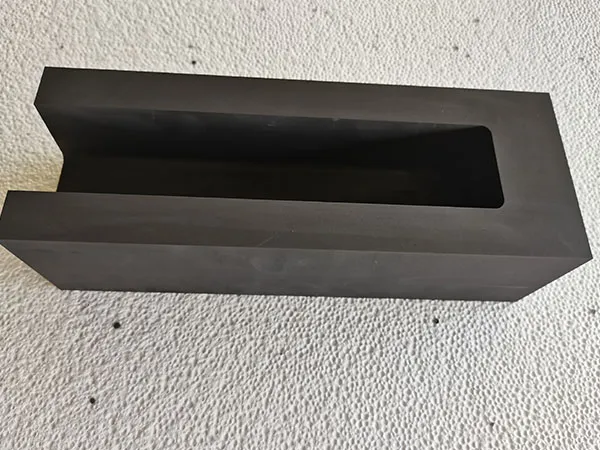
1. Precision Surface Finishing
Surface condition has a direct impact on erosion resistance. A smoother mold surface reduces friction and minimizes turbulence in molten metal flow.
Manufacturers should:
Perform high-precision polishing before initial use
Conduct periodic resurfacing during maintenance cycles
Avoid surface defects that can amplify wear
2. Optimization of Molten Metal Flow
Controlling flow behavior is essential to reducing mechanical wear. Stable and laminar flow significantly lowers the erosive impact on the mold surface.
Key measures include:
Adjusting casting speed to avoid excessive turbulence
Reducing impurity and inclusion content in molten metal
Using flow control devices such as nozzles or baffles
Applying CFD (Computational Fluid Dynamics) simulations to optimize mold design
3. Upgrading Graphite Material Quality
Material selection is a long-term solution to both oxidation and erosion challenges. High-quality graphite materials offer better durability under extreme conditions.
Recommended options include:
High-density graphite, which provides improved mechanical strength
Impregnated graphite, with enhanced resistance to oxidation
Graphite composite materials, designed for superior wear resistance
Although these materials may have higher initial costs, they significantly reduce replacement frequency and total lifecycle expenses.
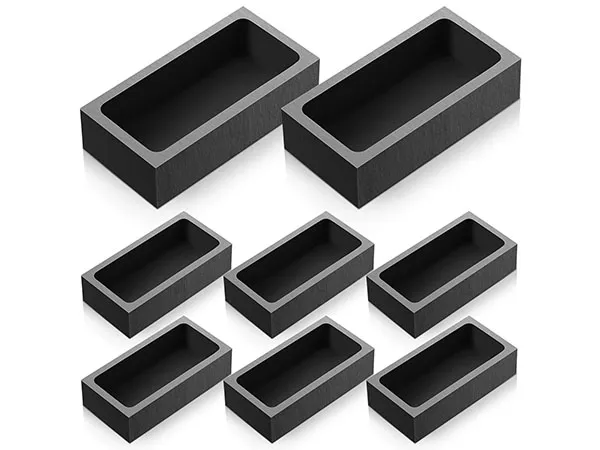
Even with optimal design and materials, consistent maintenance remains essential. A proactive approach allows operators to identify early signs of wear and take corrective action before serious damage occurs.
Effective monitoring techniques include:
Routine visual inspections for surface damage
Thermal imaging analysis to detect abnormal temperature zones
Surface profilometry to measure wear patterns
Wear tracking systems to predict maintenance intervals
By integrating these practices into daily operations, companies can minimize unexpected downtime and maintain stable production output.
Preventing oxidation and erosion in graphite continuous casting molds requires a comprehensive and systematic approach. No single solution can fully address these challenges; instead, success depends on the integration of multiple strategies, including protective coatings, controlled environments, optimized cooling, improved flow dynamics, and high-performance materials.
At the same time, ongoing maintenance and data-driven monitoring ensure that potential issues are identified early and resolved efficiently.
For manufacturers seeking to improve productivity, reduce operational costs, and maintain consistent product quality, investing in advanced mold protection strategies is not optional—it is a critical competitive advantage. A well-maintained graphite mold not only enhances heat transfer efficiency and casting precision but also supports long-term operational stability.
FAQ: Common Questions About Graphite Casting Mold Protection
Q1: How often should protective coatings be reapplied?
The frequency depends on casting conditions, but most operations benefit from inspection after each production cycle and reapplication when visible wear appears.
Q2: Does inert gas protection significantly increase costs?
While there is an initial investment, the reduction in mold wear and downtime typically results in a strong return on investment.
Q3: What is the most effective way to reduce erosion quickly?
Improving molten metal cleanliness and optimizing flow conditions usually delivers immediate results.
Q4: Are high-density graphite molds worth the investment?
Yes, especially for high-load or high-temperature applications, as they provide longer service life and better performance.

 Russian