E-Mail:kb@czgraphite.com
Tel:+86 15533739372


Graphite news is mainly for industry users to share graphite materials and products and other related technical information, so that customers can keep abreast of industry trends and developments.
Time: 2026-04-08 03:39:45 Source: Cangzhou Carbon Technology Co., Ltd.
The semiconductor industry is undergoing a paradigm shift as next-generation applications demand devices that are faster, more energy-efficient, and capable of operating under extreme conditions. Among these advancements, silicon carbide (SiC) semiconductors have emerged as a transformative technology, powering sectors from electric vehicles to renewable energy systems. However, producing high-quality SiC wafers requires materials that meet rigorous standards for thermal stability, chemical inertness, and structural integrity. This is where high-purity isostatic graphite has proven to be indispensable.
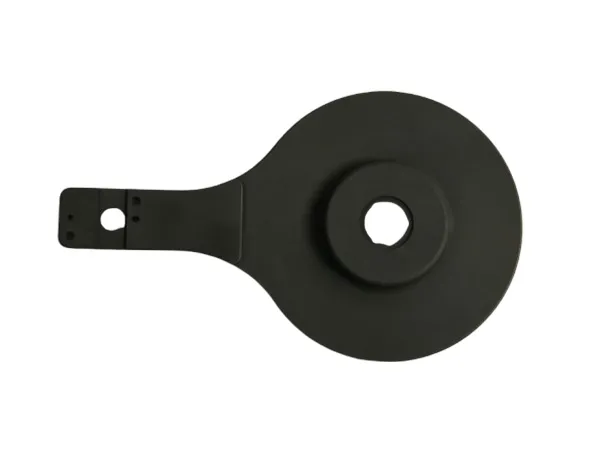
High-purity isostatic graphite is a specialized form of graphite produced through isostatic pressing, a process that applies uniform pressure in all directions to a graphite powder preform. This method ensures a remarkably consistent density, low porosity, and superior mechanical strength compared to conventional graphite forms. For SiC semiconductor manufacturers, these properties translate into unparalleled performance during the crystal growth and wafer fabrication processes.
One of the most critical applications of high-purity isostatic graphite is in SiC crystal growth using the sublimation or physical vapor transport (PVT) method. During this process, SiC powder is heated to extremely high temperatures, often exceeding 2000°C, to facilitate the formation of single crystals. Graphite components, including crucibles, heaters, and thermal shields, are exposed to intense thermal cycles and chemically reactive environments. Impurities or structural inconsistencies in conventional graphite can lead to wafer defects, inclusions, and reduced yields. High-purity isostatic graphite mitigates these risks by offering uniform thermal conductivity and exceptional resistance to chemical reactions, ensuring that the resulting SiC wafers meet stringent electronic and structural specifications.
In addition to thermal and chemical performance, dimensional stability is a significant factor in next-gen SiC semiconductor production. During prolonged high-temperature operations, standard graphite may deform, warp, or experience differential expansion, introducing stresses into the SiC crystal lattice. High-purity isostatic graphite, with its isotropic structure, minimizes anisotropic expansion and maintains precise geometries, supporting consistent crystal growth and reducing the likelihood of internal defects. This characteristic is particularly vital for the production of large-diameter wafers, which are increasingly required to meet the demands of high-power devices and industrial-scale applications.
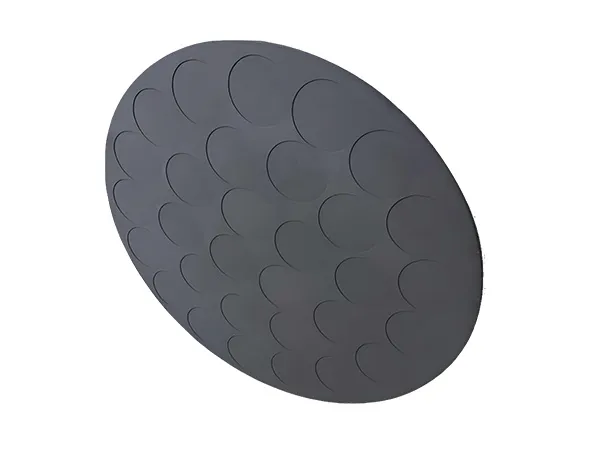
Moreover, high-purity isostatic graphite enhances the overall efficiency of the SiC production line. Its excellent electrical and thermal conductivity allows for uniform heating and faster thermal response in induction or resistive heating systems. Manufacturers benefit from shorter processing cycles, lower energy consumption, and improved throughput. These operational advantages not only reduce production costs but also contribute to sustainable manufacturing practices by minimizing the environmental footprint of semiconductor fabrication.
Another crucial aspect is contamination control. In SiC semiconductor production, even trace amounts of metallic or carbon-based impurities can degrade device performance. High-purity isostatic graphite is manufactured under controlled conditions with rigorous quality assurance protocols, resulting in ultra-low levels of impurities such as iron, nickel, and chromium. By maintaining a pristine environment for SiC crystal growth, it ensures that electronic properties such as carrier mobility, breakdown voltage, and thermal conductivity are not compromised.
The strategic adoption of high-purity isostatic graphite also aligns with the industry's move toward larger wafer sizes and higher production yields. As manufacturers scale from 4-inch and 6-inch wafers to 8-inch or larger diameters, the mechanical and thermal demands on graphite components increase exponentially. High-purity isostatic graphite's superior strength, isotropic properties, and thermal resilience make it the material of choice for next-generation SiC wafer production, where consistency, reliability, and defect-free output are critical to maintaining a competitive edge.
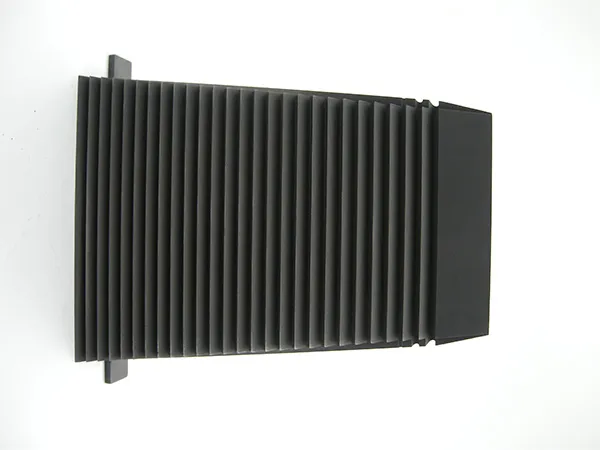
Furthermore, high-purity isostatic graphite offers flexibility for custom applications. Manufacturers can design graphite components in complex shapes and dimensions, tailored to specific reactor configurations, heating profiles, or process requirements. This adaptability allows semiconductor producers to optimize growth conditions, improve crystal uniformity, and extend the lifespan of reactor components, ultimately enhancing the economics of SiC semiconductor manufacturing.
In conclusion, the emergence of high-purity isostatic graphite as a cornerstone material in next-gen SiC semiconductor production reflects its unmatched combination of thermal stability, mechanical strength, chemical purity, and dimensional precision. By addressing the critical challenges of crystal growth, contamination control, and process efficiency, it enables manufacturers to achieve higher yields, superior device performance, and consistent quality at scale. As the semiconductor industry continues to push the boundaries of power electronics, electric vehicles, and renewable energy technologies, high-purity isostatic graphite will remain a secret yet pivotal factor in driving innovation and unlocking the full potential of SiC semiconductors.
For companies looking to advance their SiC wafer production capabilities, investing in high-purity isostatic graphite components is no longer optional—it is a strategic imperative. By integrating this material into your manufacturing processes, you can not only enhance product performance and reliability but also secure a competitive advantage in the rapidly evolving semiconductor market.

 Russian