E-Mail:kb@czgraphite.com
Tel:+86 15533739372


Graphite news is mainly for industry users to share graphite materials and products and other related technical information, so that customers can keep abreast of industry trends and developments.
Time: 2026-09-14 02:36:49 Source: Cangzhou Carbon Technology Co., Ltd.
Graphite crucibles are indispensable in high-temperature applications such as metal melting, alloy casting, and laboratory analysis. However, when exposed to extreme heat in the presence of oxygen, graphite begins to oxidize — a process that gradually erodes the crucible wall, reduces its structural integrity, and shortens its service life. For industries that rely on consistent thermal performance and cost-efficiency, preventing oxidation is not just a maintenance issue; it is a strategic priority. This article presents a comprehensive, technically grounded approach to mitigating graphite crucible oxidation at high temperatures, covering material selection, protective coatings, operational best practices, and the tailored solutions offered by Cangzhou Carbon.
Graphite oxidizes when carbon atoms react with oxygen at elevated temperatures, typically above 500°C (932°F). The reaction produces carbon monoxide or carbon dioxide gas, which escapes from the surface, leaving behind a porous and weakened structure. The rate of oxidation accelerates exponentially with temperature. In practical terms, a crucible subjected to repeated cycles above 1200°C without protection can lose 3–5% of its mass per hour, drastically reducing its lifespan and increasing the risk of catastrophic failure during a melt.
Recognizing these factors is the first step toward selecting effective prevention strategies.
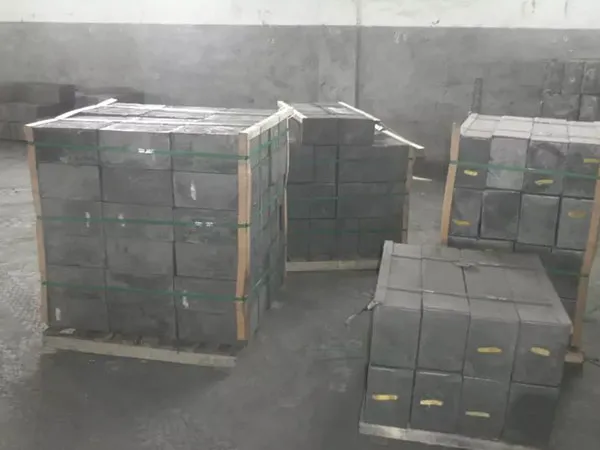
Not all graphite crucibles are created equal. The base material's density, purity, and grain structure directly influence oxidation resistance. Higher-density graphite has fewer internal pores, which reduces the surface area available for oxygen attack. Fine-grained, isostatically pressed graphite typically exhibits superior oxidation resistance compared to coarse-grained, vibration-molded alternatives.
When purchasing crucibles, always review the manufacturer's data sheet for oxidation start temperature and maximum safe operating temperature in air. Cangzhou Carbon offers a range of high-density, ultra-pure graphite materials specifically engineered for demanding thermal environments.
Coatings are the most widely adopted method for preventing graphite crucible oxidation. They function as a physical barrier that separates the graphite from oxygen, while also reflecting some radiant heat. The ideal coating must withstand the same temperatures as the crucible, adhere well under thermal cycling, and not contaminate the melt.
Cangzhou Carbon offers pre-coated crucibles with a proprietary oxidation-resistant layer that has been field-tested in continuous melting operations above 1300°C, providing up to 50% longer service life compared to uncoated alternatives.
Even with a high-grade crucible and coating, operating conditions play a critical role. Controlling the furnace atmosphere is the most direct way to eliminate oxidation.
Flowing argon or nitrogen around the crucible displaces oxygen. For batch furnaces, a low flow rate (5–10 L/min) is sufficient for small crucibles. For continuous operation, maintain a positive pressure to prevent air ingress. Note that using pure inert gas can add operational cost, but it dramatically extends crucible life.
After use, allow the crucible to cool in a dry, covered area. Store it in a sealed container with desiccant to minimize moisture absorption, which can promote oxidation during the next heating cycle.
While prevention techniques are universally applicable, the quality of the crucible itself determines the baseline. Cangzhou Carbon specializes in manufacturing graphite crucibles with optimized density, purity, and pre-applied protective coatings tailored to specific temperature ranges and metals. Their products undergo rigorous quality control, including oxidation resistance testing in simulated high-heat environments. Additionally, their technical team provides application guidance to help customers fine-tune their operational parameters for maximum crucible longevity. For organizations that demand consistent performance and lower total cost of ownership, partnering with an experienced manufacturer like Cangzhou Carbon is a crucial part of an effective oxidation prevention strategy.
It depends on the coating type and operating severity. Glass-based coatings typically last 20–50 heat cycles before requiring touch-up. Inspect the crucible visually after each use; if you see bare graphite patches or a dull, powdery surface, it is time to recoat.
Yes, but only if the operating temperature stays below 500°C or if you are using a vacuum/inert atmosphere furnace. In open-air, unprotected graphite crucibles will oxidize quickly, leading to premature failure and potential metal contamination.
Yes. Molten copper and its alloys can catalytically promote oxidation if they come into contact with the crucible wall. Using a suitable wash or barrier coating is strongly recommended when melting copper-based materials.
With proper coating and operation, a high-density crucible can last 100–300 heat cycles before needing replacement. Cangzhou Carbon reports that many of their clients achieve over 200 cycles with their premium coated crucibles in aluminum and brass melting applications.
Preventing graphite crucible oxidation in high heat is a multi-layered challenge that demands attention to material quality, protective coatings, and operational discipline. By selecting a high-density crucible, applying a suitable refractory coating, and controlling the furnace atmosphere, operators can significantly extend crucible life and reduce replacement costs. Partnering with a reputable manufacturer such as Cangzhou Carbon further ensures that the crucible starts with a built-in resistance to oxidation, giving you a decisive advantage in maintaining consistent performance under extreme conditions.
